


Free written scope consultation - allowances, timeline, and change-order rules on paper before a single trade is scheduled
Sterling Driveway & Pavers: The Orlando Owner’s Guide
We stock and install Sterling-compatible driveway and paver parts across Orlando, with most replacements running $450 to $2,800 depending on the component and how much sub-base repair is needed. If you’ve got a sunken paver, a cracked border piece, or a driveway edge that’s starting to crumble, we can usually match the part and get it set correctly the first trip. Most Orlando homeowners discover the problem after a heavy summer storm, when water pools in a new low spot or a paver shifts and creates a trip hazard near the garage.
The truth about Sterling driveway systems is that the pavers themselves rarely fail. What fails is what’s underneath them: the sand bedding washes out, the edge restraint lets go, or the base settles in Florida’s sandy, shifting soil. When that happens, the part you need is often more than just a replacement paver. You need the base corrected, the restraint reset, and the surface relaid so water drains the way it was designed to. That’s the difference between a patch job and a repair that holds up through Orlando’s rainy season.
We’re an independent service provider, not affiliated with Sterling, but we work with their driveway and paver lines regularly and know which components interchange and which ones don’t. Give us a call at (850) 809-0306 and we’ll tell you exactly what we’re looking at, what it costs, and when we can have it done.
Which Sterling Models This Applies To
Sterling’s driveway and paver systems fall into a few distinct product families, and the compatibility gotcha that trips up most Orlando homeowners is that paver dimensions are not universal across the lineup. The older Sterling Estate series used a 60mm paver thickness, while the current Sterling Ashlar and Sterling Slate lines run 80mm for driveway-rated applications. You cannot drop an 80mm paver into a bed graded for 60mm without creating a lip that catches tires and cracks over time. If you’re replacing a single damaged paver, thickness matters more than the surface pattern.
Identifying the right part starts with the paver itself. Flip a loose piece over and look for a mold stamp or series code on the underside. Sterling stamps are small, usually a two-letter prefix followed by a mold number. Take a photo of that stamp and one of the paver’s top surface, and measure the thickness with a tape measure to the millimeter. That gives us everything we need to match the correct OEM piece or a quality aftermarket equivalent. For older Estate series pavers that Sterling has discontinued, we source matching aftermarket copies from manufacturers who still run those molds. The color match won’t be perfect on day one, but Florida sun fades pavers within a year, and a close-enough color blend becomes invisible faster than you’d expect.
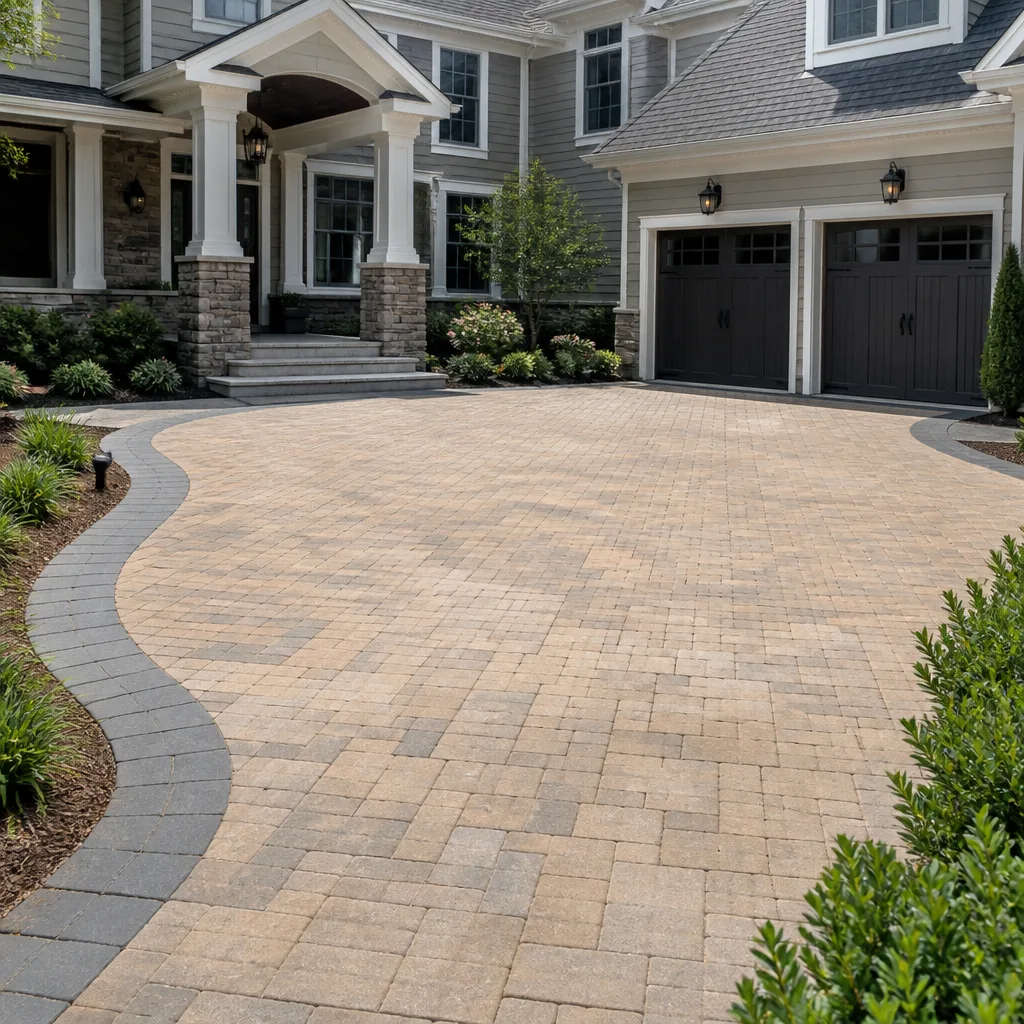
Beyond pavers themselves, the parts that matter are edge restraints, polymeric joint sand, and base aggregate. Sterling driveway systems rely on a flexible edge restraint, either aluminum or heavy plastic, staked into place. When that restraint fails, pavers spread apart and the driveway starts to look like a puzzle coming undone. We keep common restraint profiles on the truck, plus poly sand in multiple colors for Orlando’s typical paver tones.
Styles & brands we work with
Signs Your Sterling Driveway & Pavers Is Failing
- Sunken or dipped areas near the garage apron. This is almost always base failure underneath the pavers, not the pavers themselves. Orlando’s afternoon thunderstorms saturate the sandy sub-base, and without proper compaction, it settles. The fix means pulling the affected section, re-compacting the base, and relaying the pavers.
- Pavers spreading apart at the edges. When your driveway’s edge restraint lets go, the outside pavers drift outward and gaps open up. It starts small, but every car trip over the loose edge makes it worse. Replacing the restraint and resetting the border is a one-day repair if caught early.
- Weeds or grass growing through the joints. This tells you the joint sand has washed out or degraded. Sterling driveway systems use polymeric sand, which hardens when wet. Once it’s gone, the joints fill with dirt and seeds. The fix is removing the old sand, cleaning the joints, and re-sanding with a product rated for Orlando’s heat and humidity.
- Water pooling instead of running off. Driveways should drain. When yours starts holding water after a normal rain, the slope has changed, usually from base settling. Standing water seeps into the base and accelerates the damage, so don’t let this one ride.
- Cracked or chipped pavers along the driveway edge. Edge pavers take the most abuse from tires cutting the corner and from settling. A cracked edge paver is often the first visible sign of a failing restraint, not just an isolated broken piece.
See the difference
 Before
 After
After Before
 After
After Before
 After
AfterReplacement Cost & What’s Included
Most Sterling driveway and paver repairs in Orlando run between $450 and $2,800 installed. A single-paver replacement with joint sand touch-up is on the low end, usually $450 to $900. Edge restraint replacement along one side of a two-car driveway runs $800 to $1,600. A full section reset, where we pull 50 to 100 square feet of pavers, re-compact the base, and relay everything, lands between $1,500 and $2,800 depending on how much new base material is needed and how many pavers broke during removal.
What drives the range? Two things: access and what we find underneath. If we can get a wheelbarrow and compactor to the spot without tearing out landscaping, labor stays low. If the base is mush from months of standing water, we’re hauling out the old aggregate and bringing in new, which adds material and dump costs. Either way, you get a written price before we start. No surprises at the invoice.
Every repair we do is covered by the 365-Day Done Right Promise. If the pavers shift or the edge restraint fails again within a year, we come back and make it right, in writing, no argument. That’s the standard on every job we run.
DIY or Call Us?
A single loose paver that’s wiggling but sitting flush is something you can pull, add a bit of sand, and tap back into place yourself. If the paver is cracked, just be careful handling the broken edges; they’re sharp enough to need gloves. What you shouldn’t DIY is anything involving the base or the edge restraint. Last year we reset a College Park driveway where the homeowner had spent three weekends trying to fix a sunken section by adding sand on top. It looked okay for a month, then Orlando’s rainy season hit and the whole area turned into a sand pit that tracked into the house and clogged the garage drain. The base was never the problem; it was the drainage underneath.
If you’re seeing sunken pavers, spreading edges, or water pooling, the problem is structural, not cosmetic. That’s when you call (850) 809-0306 for a free estimate. We’ll tell you what’s actually wrong, what it costs, and how long the repair takes. Good work doesn’t need a speech, it just needs to hold up.
FAQs
A properly installed Sterling driveway system lasts 25 to 30 years in Orlando’s climate, with the pavers themselves often outlasting the base underneath them. The real variable is base preparation and drainage; a driveway set on poorly compacted Florida sand will need structural repair within 5 to 10 years, while one with a solid compacted base and working edge restraints can go decades with only occasional joint sand reapplication. Call (850) 809-0306 and we’ll assess what you’re working with.
Small chips and surface spalls can sometimes be dressed with a masonry grinder to blend the damage, but a full crack through the paver means replacement is the only lasting fix. Pavers are structural units; once the break runs through the body, the pieces will shift independently and the joints around them will fail within a season. We’ll tell you honestly which situation you have when we see it.
Most single-paver replacements and edge restraint fixes are done the same day, usually in 2 to 4 hours. A full section reset with base re-compaction takes a full day, sometimes a day and a half if we’re hauling in new aggregate. We’ll give you a clear timeline with the written estimate before any work starts.
We keep common edge restraints, polymeric sand in Orlando’s typical colors, and base aggregate on hand, plus good aftermarket matches for discontinued Sterling Estate and Ashlar pavers. Exact OEM pieces for current Sterling lines are ordered per job and usually arrive within a few days. Call (850) 809-0306 with your paver’s mold stamp and measurements, and we’ll tell you what we’ve got ready to go.
Written by Luca Romano, Owner & Lead Contractor, Sawyer Remodel Orlando at Sawyer Remodel Orlando, serving Orlando and nearby areas.