Last updated October 16, 2026








Free written scope consultation - allowances, timeline, and change-order rules on paper before a single trade is scheduled
General Contractor Maintenance Checklist for Orlando Homeowners
In Orlando, a house doesn’t age the way it does in Chicago or Boston. It doesn’t slowly weather under snow and ice. It gets worked over by humidity, termites, and afternoon thunderstorms that show up with almost biblical regularity from June through September. We’ve walked through hundreds of Orlando homes, and we can usually tell within ten minutes whether a homeowner has a maintenance plan or is just hoping for the best. The hope-based approach is expensive. The plan-based approach is boring, cheap, and effective. This guide is the plan, built month by month for Central Florida’s actual weather calendar, not a generic list that tells you to drain your sprinkler lines before the first freeze. You don’t have sprinkler lines. You have a stucco exterior, an HVAC system that runs eleven months a year, and a roof that fights UV damage every single afternoon.
Styles & brands we work with







Quick Answer
The single most important home maintenance task in Orlando is managing water and humidity on a monthly schedule: clean your AC condensate line every 60 days, inspect your soffits and fascia for pest entry points each spring and fall, clean and seal exterior stucco cracks before the June rainy season, and check your grading and drainage after every major storm. A homeowner who handles those four items prevents roughly 80% of the expensive repairs we get called in to fix.
Table of Contents
- January – February: HVAC Care and Dry Season Roof Checks
- March – April: Pest Pressure and Pre-Rainy Season Prep at the Roof Line
- May: The Final Stucco, Caulk, and Window Check Before the Rains
- June – September: Rainy Season Water Intrusion and Drainage Checks
- October – November: Post-Storm Recovery and Cooler Weather Project Window
- December: The One Mild Month for Interior and Systems Work
- Common Mistakes to Avoid
- When to Call a Professional
- Frequently Asked Questions
- The Bottom Line
January – February: HVAC Care and Dry Season Roof Checks
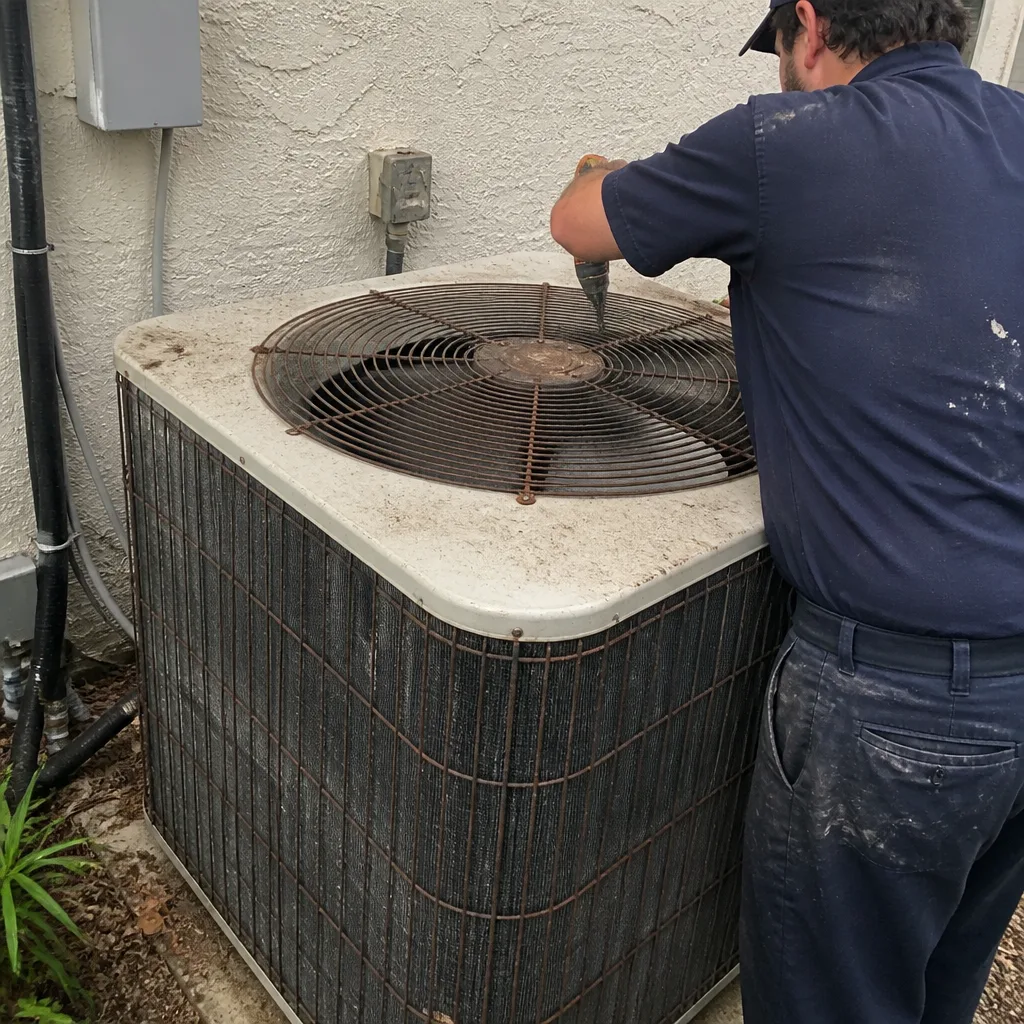
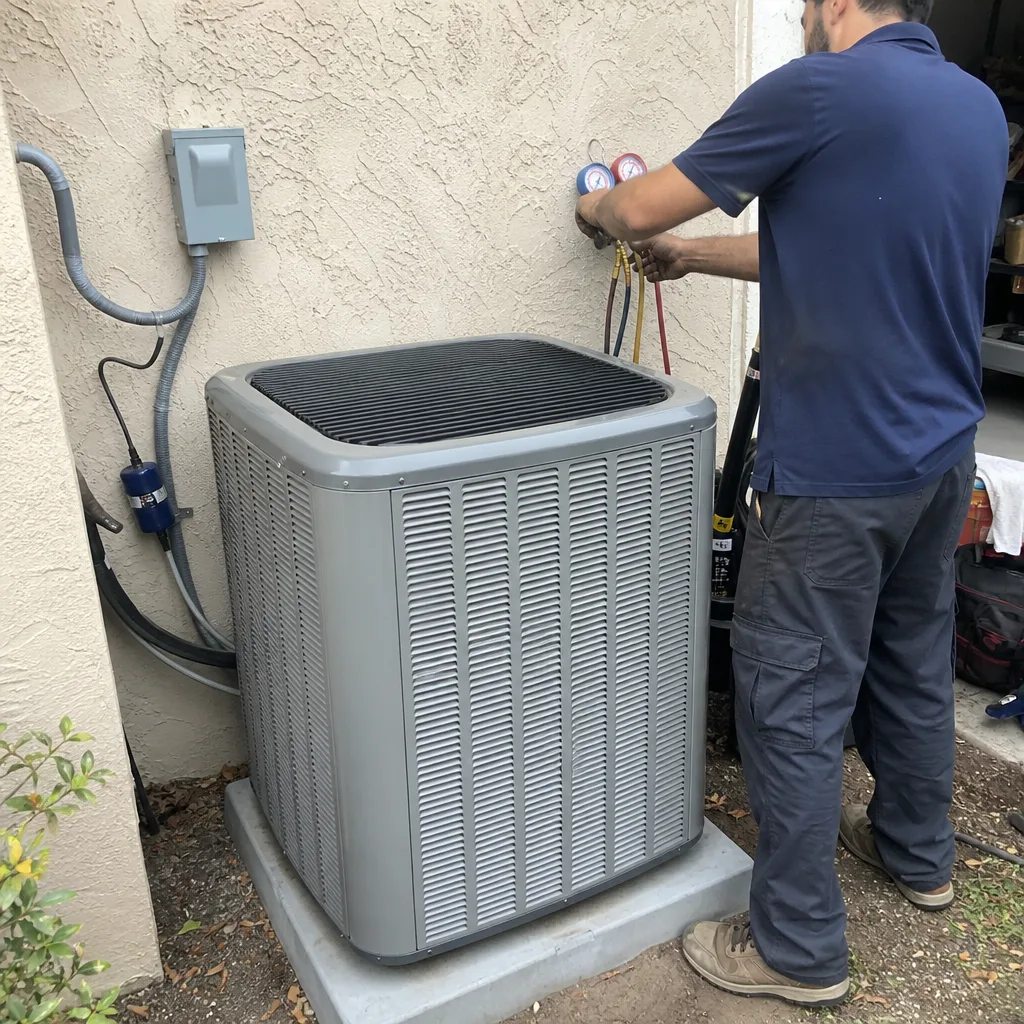
Orlando’s dry season runs from roughly November through April, and January and February are the two months when your air conditioner actually gets a partial break, though it still cycles daily. This is the time to do two unglamorous jobs that prevent expensive emergencies later. First, pour a cup of white vinegar down the AC condensate drain line. The line runs from your indoor air handler to outside, often near the condenser unit. In Orlando humidity, that line grows algae and sludge in about six to eight weeks. When it clogs, water backs up and soaks your ceiling, your drywall, or your floors, and that repair can run into the thousands. A cup of vinegar every sixty days costs about a dollar a year, and it fixes the problem before it exists.
Second, get on the roof or, if you’re not comfortable on a ladder, hire someone to walk it. Dry season roof checks are easier because shingles are cool and less brittle than in August. Look for cracked or missing shingles, rusted flashing around vents and pipes, and any shingle granule loss. In our experience with Sawyer Remodel Orlando home inspections, the most common roof failure in Orlando is not storm damage. It’s slow, years-long UV degradation that gets caught only when it’s already leaking. Manufacturers like GAF and CertainTeed build shingles for Florida’s UV exposure with enhanced granule adhesion, but even those need an annual visual check. If your roof is more than twelve years old, schedule this inspection twice a year.
While you’re up there, look for the quieter problem: debris. Oak leaves, pine needles, and the occasional shingle tab accumulate in roof valleys and behind chimneys. That debris holds moisture against the shingle surface and invites mold. A five-minute cleaning with a leaf blower in January saves a roof patch in July.
This is also the window to check your attic ventilation. Orlando attics hit 140 degrees by May, which cooks your shingles from the underside and makes your AC work harder. Make sure your soffit vents are clear and your ridge vent or turbine vents are spinning freely. Insulation baffles get knocked out of place by contractors, by pests, by a homeowner shoving Christmas boxes around. Straighten them so air flows from the soffit to the ridge.
March – April: Pest Pressure and Pre-Rainy Season Prep at the Roof Line
By late March, Orlando is warming up fast, and the pests wake up with it. This is the single most important window for the roof-line checks that Florida homeowners skip, because nobody thinks about their soffit until a roof rat is running through the attic at 2 a.m. The soffit is the horizontal board that runs under your roofline, and the fascia is the vertical board behind your gutters. In Central Florida, those two surfaces are ground zero for pest entry. Carpenter ants tunnel through water-softened fascia boards. Roof rats and squirrels enter through gaps where the soffit meets the exterior wall. Termites build mud tubes up the stucco and into any wood section of the roof line.
Here’s a concrete four-step check to do every March:
- Walk the perimeter of the house and look up. Any dark staining on the fascia or soffit means water is getting behind the paint, which means the wood is softening, which is the exact condition carpenter ants look for.
- Press a screwdriver against any stained wood. If it sinks in, you have rot. That’s one board now, and a five-board replacement later if you leave it.
- Look for small dark openings where the soffit panels meet the wall. A gap the width of a finger is enough for a roof rat. A gap the width of a pencil is enough for a wasp colony.
- Check for mud tubes: pencil-width tunnels of dirt running up the foundation wall or the stucco. If you scrape one away and it reappears within a week, it’s an active termite colony, not an old abandoned one.
This is also the month to clean gutters in Orlando, if you have them. Many older Orlando homes don’t, because our rain comes in heavy bursts, not steady drizzles, and some builders opted for splash blocks instead of gutter systems. If you do have gutters, clean them in late March, before the afternoon thunderstorms arrive. A clogged gutter in June overflows and pours water directly down your wall, which soaks the stucco, which then fails from the inside out.
When we walk a home as a General Contractor in Orlando, the soffit and fascia check tells us more about how a homeowner maintains their house than almost anything else. It’s not expensive to fix early. It’s very expensive to fix late.
May: The Final Stucco, Caulk, and Window Check Before the Rains
May is the last dry month, and it’s the month we’d tell every Orlando homeowner to spend one Saturday outside with a caulk gun and a tube of elastomeric sealant. Here’s the mechanics of the problem: Florida stucco is a cement-based surface over wood or block framing. It expands and contracts slightly with temperature changes. Over several years, hairline cracks appear. Those cracks are cosmetic until the rainy season arrives. Then, for ninety days straight, water drives into those cracks under wind pressure, soaks into the substrate, and begins the slow work of rot and mold that you won’t see until a patch of paint peels off in October.
Walk the entire exterior in May and mark every crack you find. Any crack wider than a credit card edge, or any crack you can fit a fingernail into, should get elastomeric caulk. Silicone caulk fails on stucco in Orlando because it can’t flex with the surface. Elastomeric sealant stretches and contracts with the stucco. It’s the difference between a seal that lasts two years and one that lasts six.
Windows get the same treatment. Check the caulking around every window frame, both outside and inside. Orlando homes built before the 2002 Florida Building Code update have older window flashing and less protection against wind-driven rain. A tube of sealant around each window frame in May prevents the interior water staining we see every August in Orlando homes. Check the weep holes at the bottom of the window frame, the small slots that let water drain from the track. Those get clogged with dust and bug nests. A paperclip clears them in ten seconds.
Finally, walk the base of your home and look for any gap between the stucco and the foundation. Termites don’t need a gap. They build tubes. But standing water at the foundation line is what softens the bottom edge of stucco and turns a cosmetic crack into a structural one. If you can see soil meeting stucco in the rainy season, re-grade so the soil slopes away, or add a concrete mow strip.
June – September: Rainy Season Water Intrusion and Drainage Checks
From mid-June through late September, Orlando gets an afternoon thunderstorm roughly four days out of every five. Some weeks, it’s every single day. The storms are violent, brief, and intensely local, and they test every weak point in your home’s water defense. This is not the season for major exterior work. Roofers can’t safely work on a wet roof, stucco won’t cure properly in rain, and paint won’t adhere to a damp surface. This is the season for three things: monitoring, quick response, and drainage verification.
Standing water after a storm is the single clearest signal that your grading has failed or your drainage is insufficient. After any storm that drops more than an inch of rain, walk the yard within an hour or two. Orlando’s flat topography means water doesn’t naturally run off a lot. It sits. Look for water pooling within five feet of the foundation. That’s a problem. Look for water standing in swales (the shallow ditches between homes). A swale that holds water for more than 24 hours is a mosquito breeding ground and a foundation risk. In our experience with Home Renovation in Orlando, roughly half of all foundation moisture problems start as a swale that was never re-contoured after a neighbor’s landscaping changed the drainage pattern.
Inside, the rainy season is when you find the leaks you didn’t know you had. The best early-warning tool is cheap and low-tech: a flashlight and a ceiling inspection. After any storm with wind-driven rain, check the corners of every ceiling, around every ceiling fan, and around every recessed light. Look for a faint water line, a yellow-brown shadow, or a change in paint texture. Those stains show up weeks before the drip does, and fixing a water stain is dramatically cheaper than replacing a section of water-damaged drywall.
Check the weather stripping on your doors. In a heavy Orlando storm, wind drives rain against the exterior walls and doors, and a worn door sweep lets water under the door. Replace sweeps and thresholds in the dry season, but check them during the rainy season. A wet entryway after every storm is telling you exactly where the water is coming from.
Finally, keep an eye on your AC during this period. Your system is running harder in summer, and the higher humidity means the condensate line is producing more water than any other time of year. If you skipped the vinegar treatment in January, the June-to-September window is when the clog happens. When your air handler shuts off due to a full drip pan, that’s the system telling you the line is blocked. If you hear water dripping inside the wall or see a watermark near the air handler, shut the system off and check the line. In Orlando, a clogged condensate line can dump five gallons of water into a ceiling in a single afternoon.
October – November: Post-Storm Recovery and Cooler Weather Project Window
By mid-October, the rainy season is done, the humidity is dropping, and Orlando enters the second project window of the year. The first was spring. This one is better for most exterior work, because the days are shorter but consistently dry, and temperatures sit in the 70s and 80s. Roofers, painters, and stucco crews book up fast in October, so if you have a project you’ve been delaying, this is the window to schedule it.
Before you schedule anything, do two post-storm checks. First, inspect your roof for wind damage. Even a Category 1 or tropical storm can lift shingle tabs, and shingles that have been lifted stay lifted. They don’t reseal on their own. Look for shingles where the adhesive strip has failed, indicated by tabs that flap or sit at an angle. Wind-damaged shingles let water in during the next storm, and they’re covered by most homeowners insurance policies if you file promptly. The longer you wait after storm season, the harder it is to connect the damage to the storm.
Second, walk your walls and look for new stucco cracks. The thermal stress of a hot summer followed by cooler fall nights widens existing cracks and creates new ones. Any crack that appeared during the rainy season needs to be sealed before the next one.
October and November are also the right months for soffit and fascia repair in Central Florida. The wood is dry, the days are moderate, and the work cures properly. If you found rot or pest damage in March and put it off, you’re now six months closer to a bigger problem. Replace the board, seal the gap, and prime and paint the repair. A properly painted fascia should last seven to ten years in Orlando sun; a bare patch of wood attracts moisture, then ants, then more rot.
This is the maintenance rhythm that most Orlando homeowners figure out by about year five of homeownership. The dry season is for fixing what the wet season revealed. The Bathroom Remodeling in Orlando projects, the kitchen facelifts, the exterior painting – every Orlando contractor’s fall calendar fills up because that’s when the weather finally cooperates.
December: The One Mild Month for Interior and Systems Work
December in Orlando is what passes for downtime. The UV index is lower, the humidity is down, and the HVAC system is finally getting a rest. This is the month to handle interior work and systems maintenance that doesn’t depend on weather. If you’ve been holding off on a bathroom gut, a kitchen update, or a flooring replacement, December is one of the best months to schedule it, because crews are moving faster on shorter days and materials don’t sit in the rain.
It’s also the month to do a slow, careful walk-through of the interior with a flashlight and a paper towel. Look under every sink for slow drips or water damage. Check the water heater for rust or moisture at the fittings. In Orlando, water heaters often live in the garage or a utility closet, and a slow rust problem in a garage corner gets ignored for years until it floods. Check the anode rod in your water heater every three to five years; in Central Florida’s hard water, water heaters fail faster than the national average.
This is the month to test every GFCI outlet in the kitchen, bathroom, and garage. Press the test button, then the reset button. If an outlet won’t reset, the circuit is compromised. In Florida humidity, GFCI outlets corrode faster than in dry climates.
Check your smoke detectors and carbon monoxide detectors, replace the batteries, and check the manufacturing date on the back. Smoke detectors last about ten years. After that, the sensor degrades even if the beep still works.
December is also when we recommend scheduling any interior work like a bathroom remodel in Orlando, because subcontractors are available, materials ship reliably, and the work won’t be interrupted by rain delays. You’ll have it done before the spring rush, when every Orlando homeowner suddenly wants their house ready for graduation parties and summer guests.
Common Mistakes to Avoid
- Following a northern maintenance schedule. If your checklist tells you to drain exterior faucets in October and inspect your furnace in November, it wasn’t written for Orlando. You’ll skip the rainy season prep that actually matters here while doing tasks that don’t apply.
- Ignoring small stucco cracks because they’re “cosmetic.” In dry climates, a hairline crack stays a hairline crack. In Orlando, that crack becomes a water channel for three months straight, and you’ll find the mold in the drywall behind it.
- Skipping the condensate line until the AC shuts off. By the time the float switch trips and the system stops running, water has already been pooling somewhere. The $1 vinegar pour is the highest-leverage maintenance task in Orlando.
- Painting over rotten soffit or fascia instead of replacing the board. Paint seals in the rot and hides the problem while the wood continues to decay underneath. Paint is not rot mitigation.
- Waiting until after storm season to check the roof. You want to find loose shingles in April, not in October after the first tropical system has peeled them back and let water in.
- Using silicone caulk on stucco. Silicone can’t flex with the thermal movement of stucco, and it fails within two seasons. Elastomeric sealant is the right product for every stucco surface in Central Florida.
- Ignoring the swale between homes. In Orlando’s flat terrain, the swale is doing your heavy drainage work. If it’s clogged with debris or overgrown, standing water sits against your foundation and the neighbor’s, and both houses pay for it.
When to Call a Professional
Most of this checklist is DIY-able with a caulk gun, a flashlight, and a Saturday. But there are specific moments when continuing to patch things yourself is the expensive decision. If you find active termite tubes, a soffit that’s rotted through, or stucco cracks wider than a quarter inch that go all the way through to the substrate, call a licensed Florida contractor. The Florida licensing line matters: a licensed contractor carries liability insurance and workers’ comp, while a handyman often carries neither. Don’t climb your roof if you’re not experienced on a ladder. Don’t open a wall that’s showing signs of mold without a containment plan. And if you’re seeing water stains on multiple ceilings after a storm, the problem is bigger than one leak. Sawyer Remodel Orlando offers free estimates in Orlando, and we’ll walk the house with you and tell you honestly what needs fixing now, what can wait until the dry season, and what’s a non-issue. Call (850) 809-0306.
Frequently Asked Questions
A visual maintenance inspection in Orlando typically runs $150 to $400 depending on house size, and many contractors will credit that fee toward any repair work. Sawyer Remodel Orlando offers free estimates for maintenance and remodel work. Call (850) 809-0306 to schedule a walkthrough.
Every 60 days, year round. In Orlando, the AC runs ten to eleven months a year, and the condensate line grows algae and sludge continuously. A cup of white vinegar or a commercial condensate line treatment every two months prevents the clog that causes ceiling and wall water damage.
Not the way northern homes do. Orlando does get brief overnight freezes a few times each decade, and the standard Florida prep is simple: cover exterior plants, disconnect any garden hoses, and leave indoor faucets dripping on the rare hard-freeze night. You don’t need to drain pipes or winterize a sprinkler system.
Hairline cracks under about an eighth of an inch are a DIY job with elastomeric caulk, which costs about $8 a tube. Cracks wider than that, or cracks that go all the way through the stucco to the substrate, require a professional since the underlying cause might be structural movement or water infiltration.
Soffit and fascia replacement in Orlando generally runs $8 to $20 per linear foot depending on material, with most single-side replacements landing between $500 and $1,500. Getting it done before rot spreads is the difference between a board replacement and a section rebuild.
Waiting until water shows up inside the house to address the outside. By the time you see a water stain on a ceiling or a bubble in the drywall, the leak has been running for weeks or months, and the repair cost has tripled. The entire point of this checklist is catching problems at the stage where they cost a tube of caulk instead of a drywall crew.
The Bottom Line
Orlando homes have their own maintenance physics. Water, humidity, and pests are the three forces working against you year round, and they all attack quietly. The homeowner who does the boring work, the vinegar in the AC line, the May stucco walk, the post-storm drainage check, that’s the homeowner who spends a few hundred dollars a year instead of several thousand on emergency repairs. We’ve built our reputation as a General Contractor in Orlando on the simple idea that the cheapest repair is the one you never need. If you want a professional walkthrough before the next rainy season, we’d rather walk your house for an hour than pull your drywall out for a week. Call (850) 809-0306 for a free estimate, and we’ll tell you exactly what we’d fix first and why.
Written by Luca Romano, Owner at Sawyer Remodel Orlando, serving Orlando since 2005.
See the difference
 Before
 After
After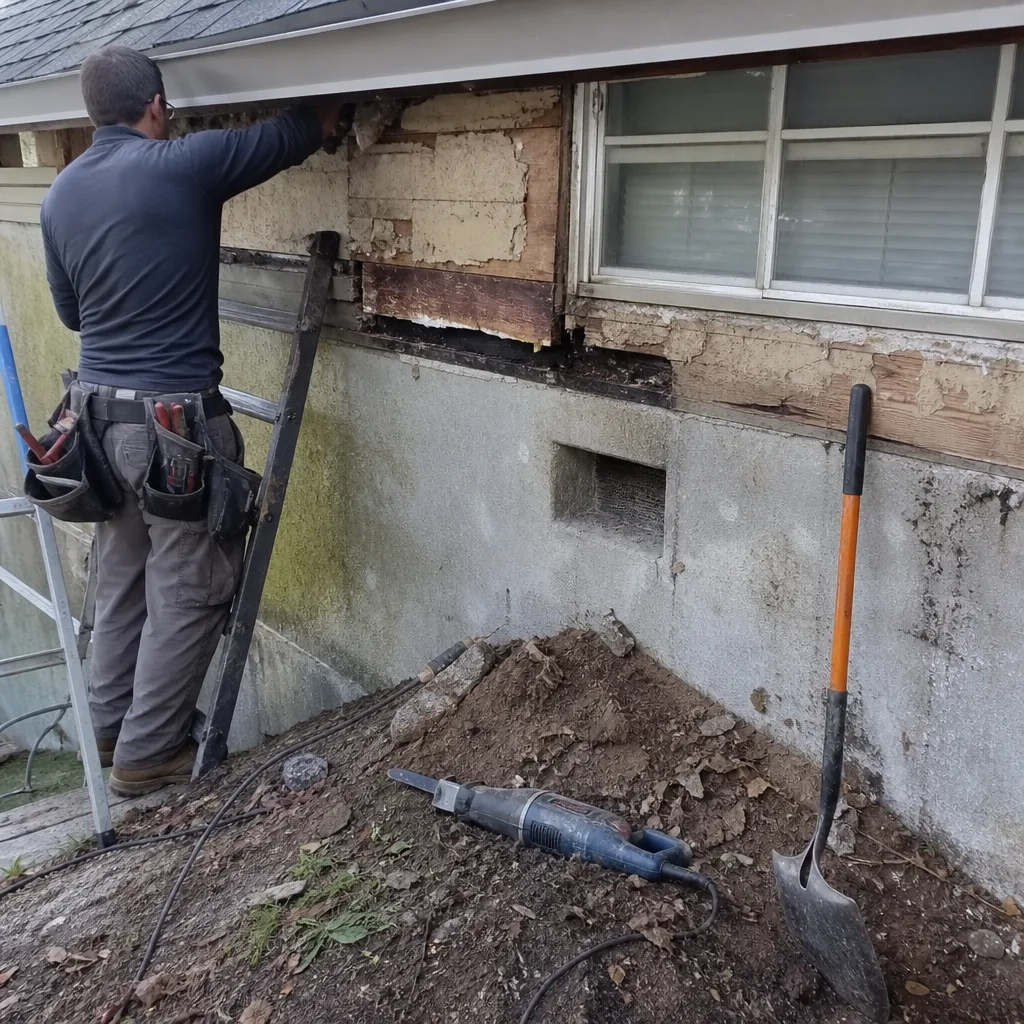 Before
 After
After Before
 After
After