Last updated October 16, 2026








Free written scope consultation - allowances, timeline, and change-order rules on paper before a single trade is scheduled
How to Hire a Construction Contractor in Orlando: A Step-by-Step Guide
Ask five Orlando homeowners how they picked their contractor and four will tell you they went with the best price. Ask those same five homeowners a year later whether they’d do it again, and the math stops being so friendly. A contractor who pulls their own permits, carries active general liability and workers’ comp, and hands you a written scope of work before asking for a dime is rarer in Orlando than a quiet afternoon on I-4. That’s not a knock on the trade. It’s a reality of a market where licensing enforcement lags behind storm-related demand, and where the difference between a craftsman and a chancer rarely shows up in the estimate. What you’ll learn here is how to make that difference show up. This guide covers license verification on the Florida DBPR site, the three contract clauses that stop scope-creep billing cold, how to structure payments so you never owe more than the work is worth, and the Orlando-specific red flags that out-of-town “contractors” leave behind after every hurricane season.
Styles & brands we work with







Quick Answer
Hiring a construction contractor in Orlando means verifying a Florida contractor license on the DBPR website, collecting a written scope of work with line-item pricing, and structuring payments around completed milestones rather than a lump-sum deposit. The contractor you want is the one who pulls permits under their own name, carries active general liability and workers’ comp, and can point to local Orlando projects you can verify. Never sign a contract that lets a contractor file a lien for work you’ve already paid for without releasing that lien in writing at each payment.
Table of Contents
- Step 1: Verify the Florida Contractor License (Under Two Minutes)
- Step 2: Get a Written Scope Before You Get a Price
- Step 3: The Three Contract Clauses That Stop Scope-Creep Billing
- Step 4: Why the Lowest Bid in Orlando Is Rarely the Cheapest Renovation
- Step 5: Build a Payment Schedule That Follows Completed Work
- Step 6: Orlando-Specific Red Flags That Should End the Conversation
- Step 7: The Pre-Hire Walkthrough Checklist
- Common Mistakes to Avoid
- When to Call a Professional
- Frequently Asked Questions
- The Bottom Line
Step 1: Verify the Florida Contractor License (Under Two Minutes)
Florida licenses contractors through the Department of Business and Professional Regulation, and the DBPR website lets you verify any license in about the time it takes your coffee to cool. Go to myfloridalicense.com, click “Verify a License,” and search by the contractor’s name, license number, or business name. What you’re looking for is a status that reads “Current, Active” on a Certified General Contractor, Certified Building Contractor, or Certified Residential Contractor license. Anything else is a conversation-ender.
Here’s what the status codes actually mean, because the DBPR doesn’t spell it out for you.
- “Current, Active” means the license is in good standing and the contractor can legally pull permits in Orlando. This is the only status that works.
- “Current, Delinquent” means they haven’t paid the renewal fee. In Florida, a delinquent license is not valid for contracting work. A contractor who lets a license lapse over a renewal fee is telling you how they’ll handle your project’s paperwork.
- “Null and Void” means the license lapsed and wasn’t renewed. They are legally unlicensed. Walk away.
- “Revoked” or “Suspended” means the DBPR took action. Usually there’s a complaint, a disciplinary hearing, and a finding behind that word. Walk away faster.
One more check while you’re on the DBPR site: look at the “Complaints” tab. No complaints is what you want. A pattern of unresolved complaints is the single best predictor of what your job will look like. In our experience, the five minutes this takes is the best money you’ll spend on your entire renovation, because it costs you nothing and saves you from the contractor who smiles through the estimate and vanishes when the permit gets flagged.
Step 2: Get a Written Scope Before You Get a Price
A verbal estimate is a guess with a handshake. A written scope of work is a contract you can hold someone to. The difference is the whole ballgame. Before you compare a single number between contractors, you need each one to give you a document that says exactly what they’ll do, what materials they’ll use, and what’s explicitly not included. In Orlando, where remodeling prices swing based on everything from lumber futures to hurricane-season demand for trades, a detailed scope is the only way to compare bids apples to apples.
At minimum, the scope should include:
- A room-by-room breakdown of work, not a single line that says “renovate bathroom”
- Specific material brands and product lines where it matters, like Cambria or Silestone countertops, Kohler or Toto fixtures, or James Hardie siding
- Demolition, haul-away, and dumpster fees listed as separate line items
- A start date and an estimated completion window
- A clear list of exclusions, so “paint touch-up” or “baseboard replacement” doesn’t show up later as a surprise add-on
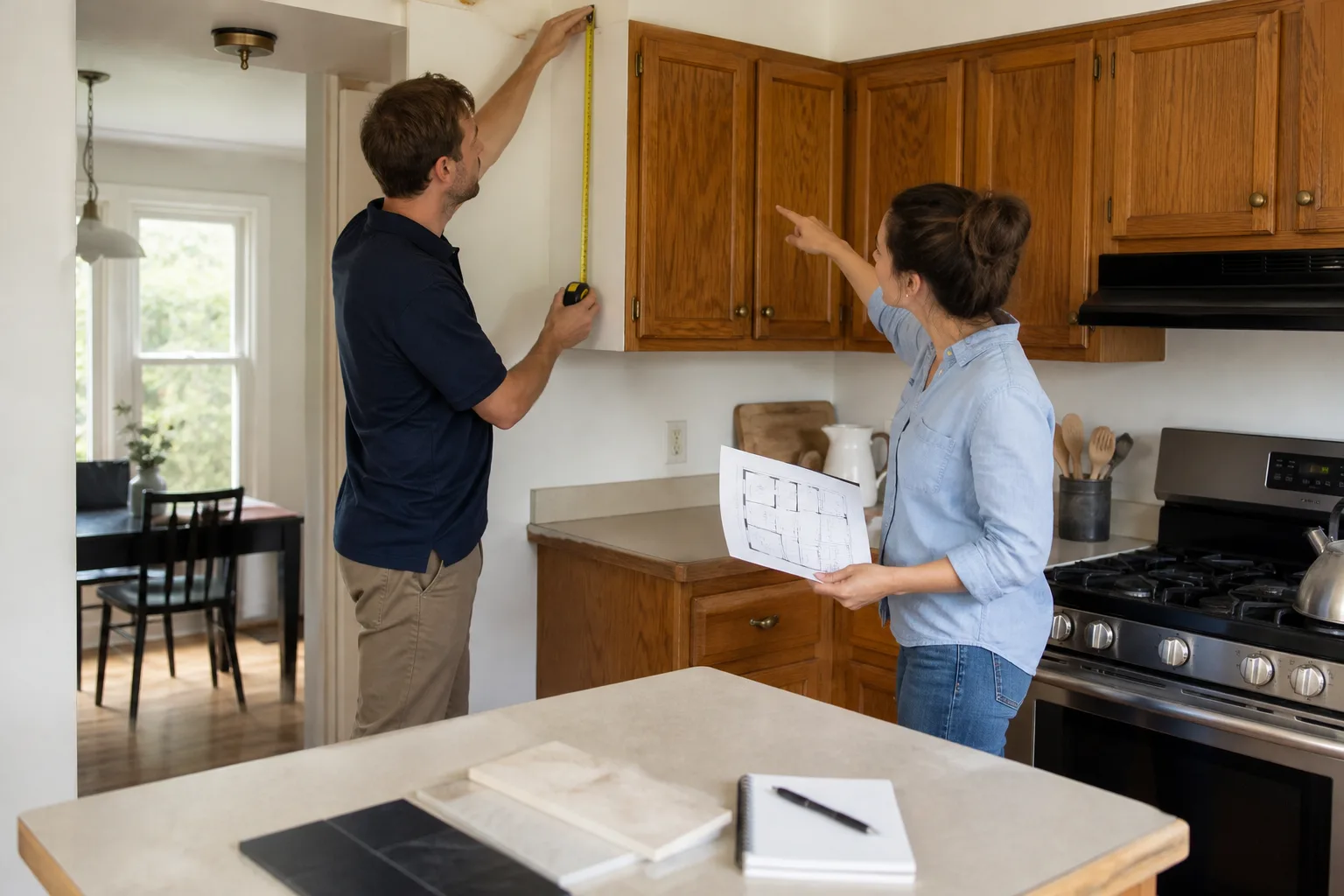
A contractor who won’t write this down before you pay them won’t magically start documenting after. The scope of work is also what you’ll hold the final invoice against. If the invoice has a line that wasn’t in the scope, you have a written reason to question it. The Sawyer Remodel Orlando home team includes a written price before any work starts as a standing policy, not an upgrade, because the number on the invoice should be the number you approved.
Step 3: The Three Contract Clauses That Stop Scope-Creep Billing
Contractors don’t usually set out to nickel-and-dime you. What happens is scope creep: small changes, “we discovered this while we were in there,” “code requires an upgrade here.” Some of that is real. But without the right language in the contract, every one of those discoveries becomes an open tab. Here are the three clauses that close it.
1. No Change-Order Work Without Written Authorization. The clause should say that any work outside the original scope requires a written change order signed by you before the work starts, and that change order must state the price. If a contractor starts unapproved work and then bills you, this clause tells them no. The exact language you want: “Any changes to the scope of work require a written change order signed by the homeowner prior to commencement of the changed work.”
2. Lien Release at Each Payment Milestone. In Florida, a contractor, subcontractor, or supplier can file a mechanic’s lien against your home if they’re not paid. The danger is paying the general contractor, who then doesn’t pay the subs, who then lien you, and you end up paying twice. The fix is a partial lien release. The clause should say the contractor provides a signed lien release from themselves and their subcontractors each time you make a payment. The exact language: “Upon each progress payment, contractor shall provide homeowner with written lien releases from contractor and all subcontractors and suppliers for the work covered by that payment.”
3. Payment Schedule Tied to Completed Stages, Not Calendar Dates. Some contractors want payments on a calendar: 30% at week two, another 30% at week four, regardless of what’s actually finished. That’s how you end up paying for tomorrow’s work at today’s price. The clause should define milestones in terms of completed work: “rough-in complete and inspected,” “drywall hung and finished,” “fixtures installed.” Each payment releases only when the milestone is visibly done. You’ll see exactly how to structure this in Step 5.
Step 4: Why the Lowest Bid in Orlando Is Rarely the Cheapest Renovation
Here’s an uncomfortable truth about remodeling in Orlando: the lowest bid usually turns into the highest final invoice. It’s not a coincidence and it’s not because contractors are crooks. It’s how underbidding works. A contractor who quotes low either doesn’t understand the full scope, is deliberately leaving things out, or expects to make it up in change orders later. All three end with you paying more than the “expensive” bid would have cost.
Say you’re renovating a bathroom in Baldwin Park or College Park. A real bid includes tile, waterproofing, fixtures, plumbing rough-in, electrical, drywall, paint, and a project manager to schedule it. A low bid might include the tile and fixtures but “forget” the waterproofing membrane, or quote the cheapest drywall and hope you don’t notice the seams. When the crew discovers the subfloor is shot, as often happens in older Orlando homes near Colonialtown North where original framing has been soaking up Florida humidity for decades, that discovery becomes a change order instead of a known line item. The low bidder’s business model depends on that discovery.
The math to remember: if a bid is more than ten or fifteen percent below the next closest bid, ask what’s missing. Ask it in writing. If the answer is vague, the gap is your future invoice. A General Contractor in Orlando who gives you a realistic number up front is telling you the truth about the job, and that truth includes the things you’d rather not pay for but will anyway. Pay for them once, with eyes open, not twice with a lawyer on the phone.
Step 5: Build a Payment Schedule That Follows Completed Work
The safest payment schedule is the one where you never owe more than the work is worth if the contractor walked off the job tomorrow. That means front-loading as little as possible and tying every payment to a verifiable milestone. Here’s a schedule that protects you on a typical Orlando remodel.
- Initial Deposit: 10% This covers mobilization, permit fees, and ordering long-lead materials. Anything above 15% up front is a red flag. Florida law caps deposits for home improvement at 10% of the total job for most residential contracts, and any contractor asking for more in Orlando is either ignorant of the law or ignoring it. Neither inspires confidence.
- Demolition Complete: 20% Pay when the old stuff is out, the dumpster is on-site or the debris is hauled, and the space is ready for rough-in. If you can see the work, release this payment.
- Rough-In Complete and Inspected: 25% This is plumbing, electrical, and framing. The “inspected” part matters. If permits were pulled, Orlando’s building department should have a record of the inspection. Pay after it passes, not before.
- Drywall and Floor Prep Complete: 20% The walls are up, the mud is dry, and the subfloor is ready for finishes. You can see it with your own eyes.
- Fixtures and Finishes Installed: 15% Tile is set, cabinets are in, countertops are down, fixtures are connected and working.
- Final Walkthrough and Punch List Complete: 10% The last 10% is your leverage. Do not pay it until the punch list is done and you’ve walked the space with the contractor. That final payment is what makes the punch list happen.
Each payment should come with a lien release, as covered in Step 3. The two work together: milestone payments stop you from paying too much too soon, and lien releases stop you from paying twice. A contractor who pushes back on either is telling you how the rest of the relationship will go.
Step 6: Orlando-Specific Red Flags That Should End the Conversation
Every market has its own flavor of contractor risk. Orlando’s flavor is the storm chaser. After every hurricane season, out-of-state crews roll in with magnetic signs on rented trucks, no Florida license, and a pitch that sounds great while your roof is tarped and your nerves are fried. Here’s what should make you hang up.
- Out-of-state licensing after a storm. A license from Georgia or Texas doesn’t let you pull permits in Orlando. Only a Florida DBPR license works. If they show you a license and it’s not Florida, they can’t legally do the work. This alone should end it.
- No local references you can actually visit. “I’ve done lots of work in the area” is not a reference. A reference is a specific address in Winter Park, Thornton Park, or Dr. Phillips where you can drive by and see the work. No addresses, no hire.
- No physical business address. A contractor with only a P.O. box, a cell phone, and a Gmail address is hard to find when the lien shows up or the work fails. You want a physical location in the Orlando metro area.
- Pressure to sign today for a “storm discount.” Reputable contractors in Orlando are booked weeks out. The one who can start tomorrow and needs a deposit today is the one whose last job just fell apart, and now you know why.
- No workers’ comp certificate. If a worker is injured on your property and the contractor doesn’t carry workers’ comp, the claim can end up against your homeowner’s insurance. Always ask for the certificate and verify it’s current.
In recent years, several homeowners in the Conway and Pine Castle areas have told us about contractors who demanded 50% deposits, started demolition, and then went quiet for weeks. The common threads were always the same: no Florida license, an out-of-state phone number, and a price that was too good to believe. Put those three together and you don’t have a deal. You have a warning.
Step 7: The Pre-Hire Walkthrough Checklist
Before you sign anything, walk through the space with the contractor and run this checklist. It’s the difference between a contractor who’s seen the job and one who’s reading a quote off a spreadsheet. A contractor who asks questions during the walkthrough is seeing the job. A contractor who nods silently and talks about price is selling you a generic remodel.
- Ask where the permit will be posted. In Orlando, permits must be displayed at the job site. If they don’t know that, they don’t pull permits here.
- Ask who the daily point of contact is. You want a name and a phone number, not a dispatch line. If the answer is “the crew will be in touch,” keep looking.
- Ask what happens if the project runs over schedule. There’s no penalty-free way to guarantee a date in construction, but a good contractor has a process for communicating delays. No process means no communication.
- Ask about the warranty in writing. A one-year workmanship warranty is standard for a quality Orlando remodeler. More importantly, ask what the process is if something fails: who do you call, how fast do they come back, what’s covered.
- Ask for proof of insurance with you as the certificate holder. You want a certificate of insurance listing you, the homeowner, as an additional insured. If they hesitate, that’s your answer.
This walkthrough is also where materials get specified. If you’re doing a Bathroom Remodeling in Orlando project, the walkthrough should name your tile, your shower system, your vanity line. Vague phrases like “quality materials” mean whatever the supplier had on sale that week. Specific names, like a Kohler shower valve or a KraftMaid cabinet line, mean the contractor has a supplier relationship and stands behind what they install. Sawyer Remodel Orlando works with material partners including Kohler, Cambria, James Hardie, and GAF, so the products on your invoice have manufacturer backing behind the install.
Common Mistakes to Avoid
- Hiring without checking the DBPR license. It takes two minutes and it’s the single most predictive step in this entire guide. A contractor who isn’t licensed in Florida cannot legally pull permits in Orlando, which means your project is unpermitted, your lien exposure is higher, and your insurance may not cover the work.
- Signing a contract without a written scope of work. The scope is the contract’s backbone. Without it, “renovate kitchen” can mean whatever the contractor decides it means. With it, you both have the same document to point at when questions come up.
- Paying a deposit above 10% before any work starts. Florida law sets the cap for most home improvement contracts, and a higher deposit is a funding problem, not a sales pitch. The contractor who needs 30% up front is financing your job with your money because they can’t get credit anywhere else.
- Choosing the lowest bid without asking what’s missing. The cheapest bid usually omits something: waterproofing, a permit, a dumpster, a warranty. Ask for the exclusions in writing. If they can’t list them, the bid is a bet you’re making against yourself.
- Signing a contract with no lien-release language. If you pay the contractor and the contractor doesn’t pay the subcontractor, the subcontractor can lien your Orlando home. A partial lien release at each payment stops that. It’s one paragraph. Demand it.
- Skipping the final walkthrough before releasing the last payment. The final 10% is the only leverage you have after the work is “done.” Hold it until the punch list is actually complete, walk the space, and then pay.
- Going with an out-of-state contractor after a storm. The storm-chaser playbook is well known in Orlando: low price, fast start, no local address, and they’re gone before the warranty claim comes in. The only name on your contract should be a Florida-licensed contractor with local Orlando references.
When to Call a Professional
You can verify a license and read a contract on your own. The moment the job involves structural changes, plumbing, electrical work, or anything behind the walls, the DIY version of this guide stops being useful and starts being a liability. A kitchen renovation or Home Renovation in Orlando is not a collection of individual tasks you can parcel out. It’s a system: the framing, the plumbing, the electrical, the waterproofing, the finishes all have to be sequenced by someone who knows Orlando’s building code and the moisture realities of Central Florida construction. If you’re not sure whether the subfloor rot in your 1960s-era Winter Park home is structural, you need a professional to look at it before you spend a dollar on tile. Sawyer Remodel Orlando offers free estimates in Orlando. Call (850) 809-0306 and we’ll give you a written scope of work and a written price before any work starts.
Frequently Asked Questions
Search the contractor’s name or license number on the Florida DBPR website at myfloridalicense.com. The license status must read “Current, Active” and the license type should be Certified General Contractor, Certified Building Contractor, or Certified Residential Contractor. A “Current, Delinquent,” “Null and Void,” or “Revoked” status means the contractor cannot legally pull permits in Orlando, and you should not sign a contract with them.
A mid-range bathroom remodel in Orlando typically runs between $18,000 and $35,000 depending on the size of the space, the condition of the framing and plumbing, and the materials you select. A small guest bath with stock fixtures might come in under $15,000, while a primary suite bathroom with custom tile, a curbless shower, and a Cambria countertop can push past $45,000. The biggest variables in Orlando are water damage and subfloor condition, which are common in homes built before the 1990s and can add thousands to a remodel once the old floor is pulled up. Call (850) 809-0306 for a free written estimate specific to your home.
Florida law caps the initial deposit on most home improvement contracts at 10% of the total job price. This cap applies to residential repairs and remodeling in Orlando and throughout the state. A contractor asking for 20%, 30%, or 50% up front is either unaware of the law or betting you are. In either case, it’s a reason to keep looking.
A single-bathroom remodel in Orlando typically takes three to five weeks once the permit is issued and work begins. A kitchen renovation runs four to eight weeks depending on cabinet lead times and the condition of the existing plumbing and electrical. A full home renovation, where multiple rooms are being gutted and rebuilt, usually spans three to six months. The biggest schedule killer in Orlando is the permitting queue at the city level, which can add two to four weeks before work starts, so factor that into your timeline.
Yes, if the remodel moves plumbing, changes electrical, or alters load-bearing walls, which covers almost every bathroom remodel in Orlando. The contractor should pull the permit under their own license and their own name. If the contractor asks you to pull the permit as the homeowner, that’s a red flag: it usually means they can’t pass inspection or they’re unlicensed, and either way the liability lands on you.
Include a lien-release clause in your contract that requires the contractor to provide a written lien release from themselves and all subcontractors at each payment milestone. The release should correspond to the payment you’re making and the work it covers. Without this clause, you can pay the general contractor in full, have a sub go unpaid, and end up facing a lien on your Orlando home anyway.
Walk every space with the contractor and point at things. Open every cabinet and drawer, run every faucet, flush every toilet, flip every light switch, and walk every inch of flooring looking for lippage between tiles or gaps between boards. Bring the original scope of work and check off every line item. If anything is incomplete, put it on the punch list in writing before releasing the final payment. The final 10% is your only remaining leverage, so use it deliberately.
The Bottom Line
Hiring the wrong contractor in Orlando costs more than money. It costs time, it costs your living space, and in the worst cases it lands you in front of a lien or an unpermitted renovation that tanks your resale value. The fix isn’t luck or gut instinct. It’s a process: verify the Florida license, get a written scope, demand the contract clauses that protect you, and structure your payments around completed work. The contractor worth hiring is the one who survives all five steps without flinching. That’s the person who gives you a written price before work starts, shows up on time, and is still answering your calls a year after the job closes. Around here, we call that Sawyer Remodel Orlando. Call (850) 809-0306 for a free estimate, and you’ll see the difference in writing before a single tool is picked up.
Written by Luca Romano, Owner at Sawyer Remodel Orlando, serving Orlando since 2005.
See the difference
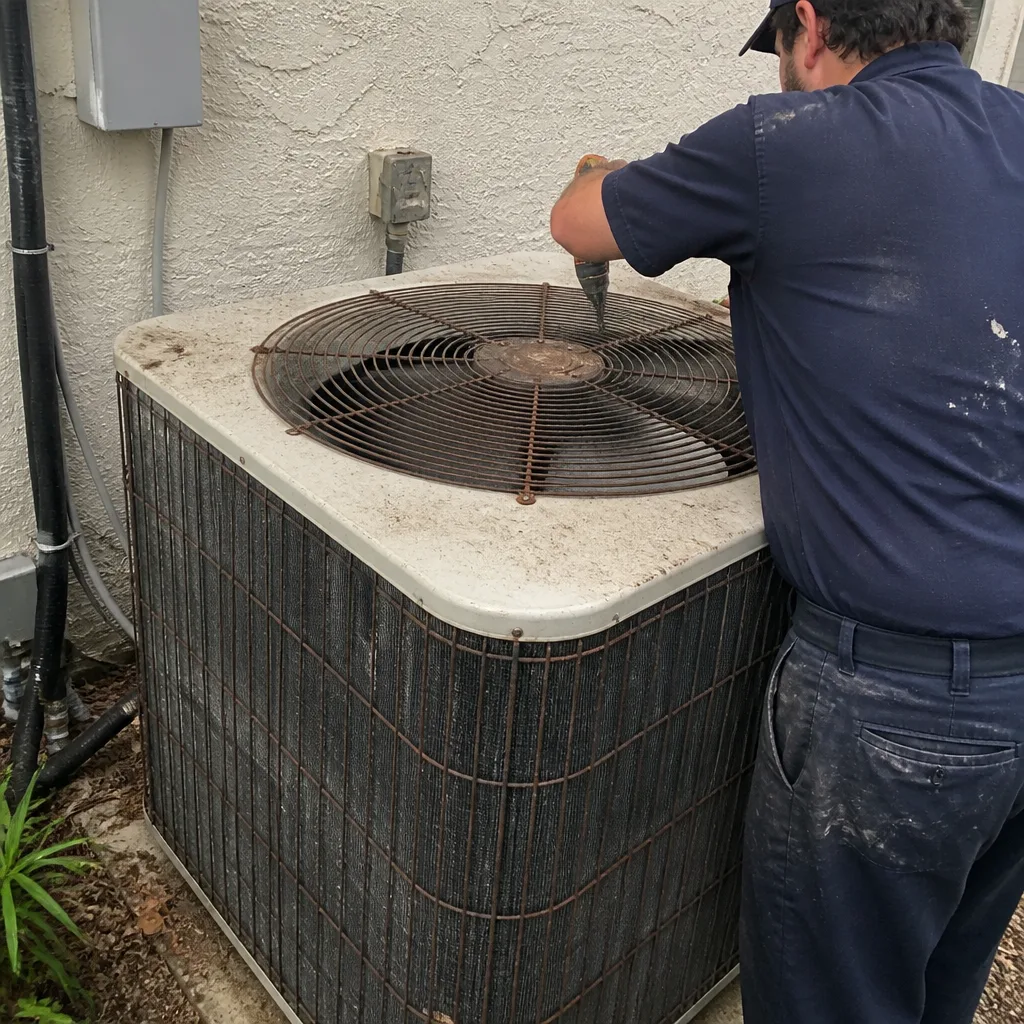 Before
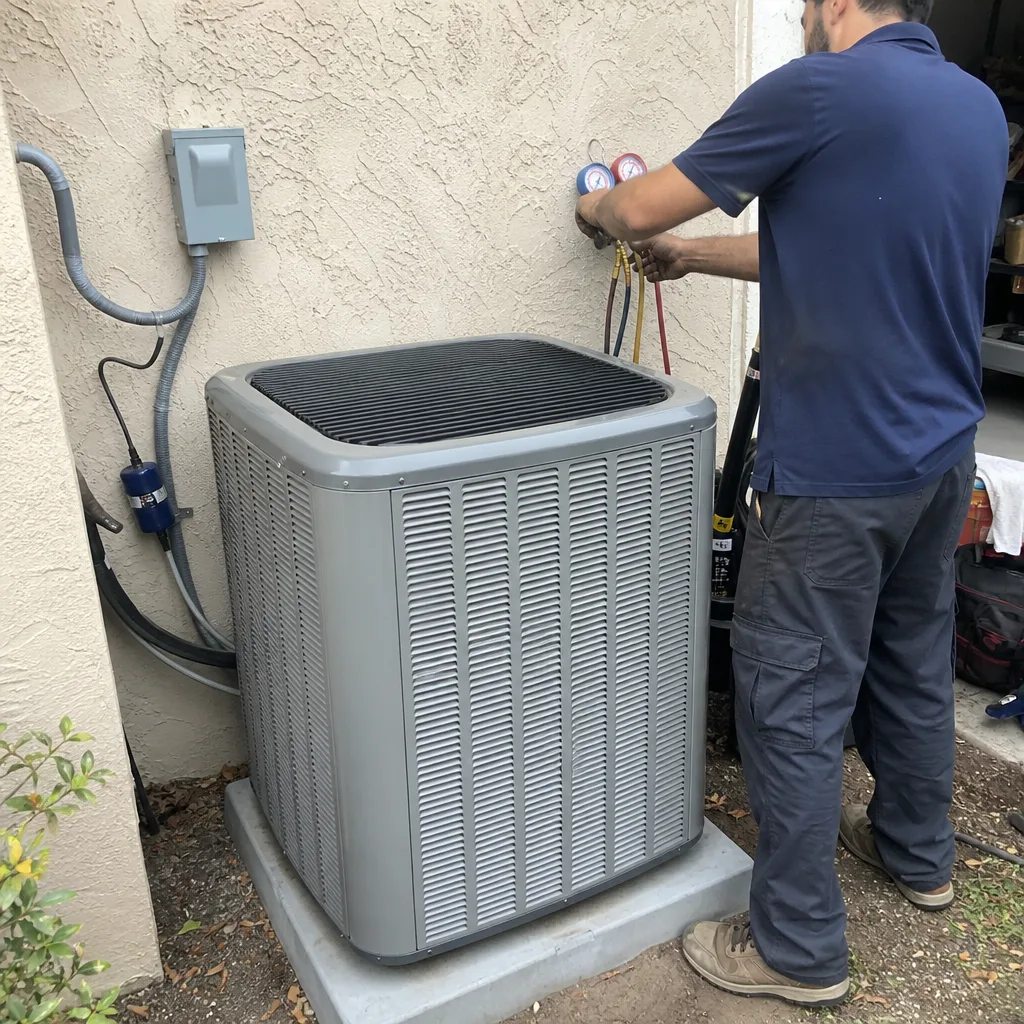 After
After Before
 After
After Before
 After
After