Last updated October 16, 2026







Free written scope consultation - allowances, timeline, and change-order rules on paper before a single trade is scheduled
Seasonal Construction Care for Orlando: Year-Round Homeowner’s Guide
From June through September, Orlando averages more than 50 inches of rain. That’s not summer weather. That’s a structural stress test your home runs every year, and the homes that pass are the ones whose owners stopped thinking in terms of spring, summer, fall, and winter. Orlando doesn’t have four seasons. It has two: wet and dry. Every construction decision, every maintenance dollar, every inspection you schedule should be organized around that binary, not a calendar borrowed from a home-improvement magazine written for Ohio or Vermont. This guide lays out exactly when to do what in Orlando, why the humidity cycle matters more than the temperature, and where homeowners waste money by trusting northern instincts in a subtropical climate. For The Complete Guide to Construction in Orlando, see our full resource library.
Styles & brands we work with




Quick Answer
Seasonal construction care in Orlando should be split into two phases: the dry season (October through May), when you schedule exterior painting, roofing, foundation work, and structural repairs, and the wet season (June through September), when you focus on drainage, seal integrity, HVAC strain, and hurricane readiness. The single best window for major exterior projects is late October, when contractor backlogs clear and the daily rain pattern has mostly stopped. A block home and a wood-frame home need different hurricane prep, and humidity, not heat, is what actually destroys finishes, framing, and air quality in Central Florida. Check Construction Permits, Codes & Inspections in FL: What You Need to Know before starting any major work.
Table of Contents
- The Dry Season (October – May): Your Real Construction Window
- Wet Season Prep (June – September): What to Do Before the First Storm
- Why Humidity, Not Heat, Is the Real Enemy in Orlando
- Hurricane Season Overlap: Block Homes vs. Wood-Frame Homes
- The Late October Window: When Contractors Actually Answer the Phone
- Month-by-Month Maintenance Calendar for Orlando
- Interior Projects That Follow the Same Wet/Dry Logic
- Common Mistakes to Avoid
- When to Call a Professional
- Frequently Asked Questions
- The Bottom Line
The Dry Season (October – May): Your Real Construction Window
In Orlando, the dry season is when the ground stops moving, the air stops holding 85% humidity, and paint actually cures instead of blistering. From October through May, daily rain drops from an afternoon certainty to an occasional front, and that changes what a contractor can reliably do on your home. Exterior paint needs 48 hours of dry weather to cure correctly. Roofing adhesive and underlayment need the same. Concrete and stucco need time without saturation. None of that exists in June, July, or August.
What you should schedule during the dry season:
- Exterior painting and siding work. Latex paint applied above 85% humidity or onto a damp substrate fails early. In Orlando’s wet months, the morning dew alone can push application windows to a few hours a day. October through April gives crews full days.
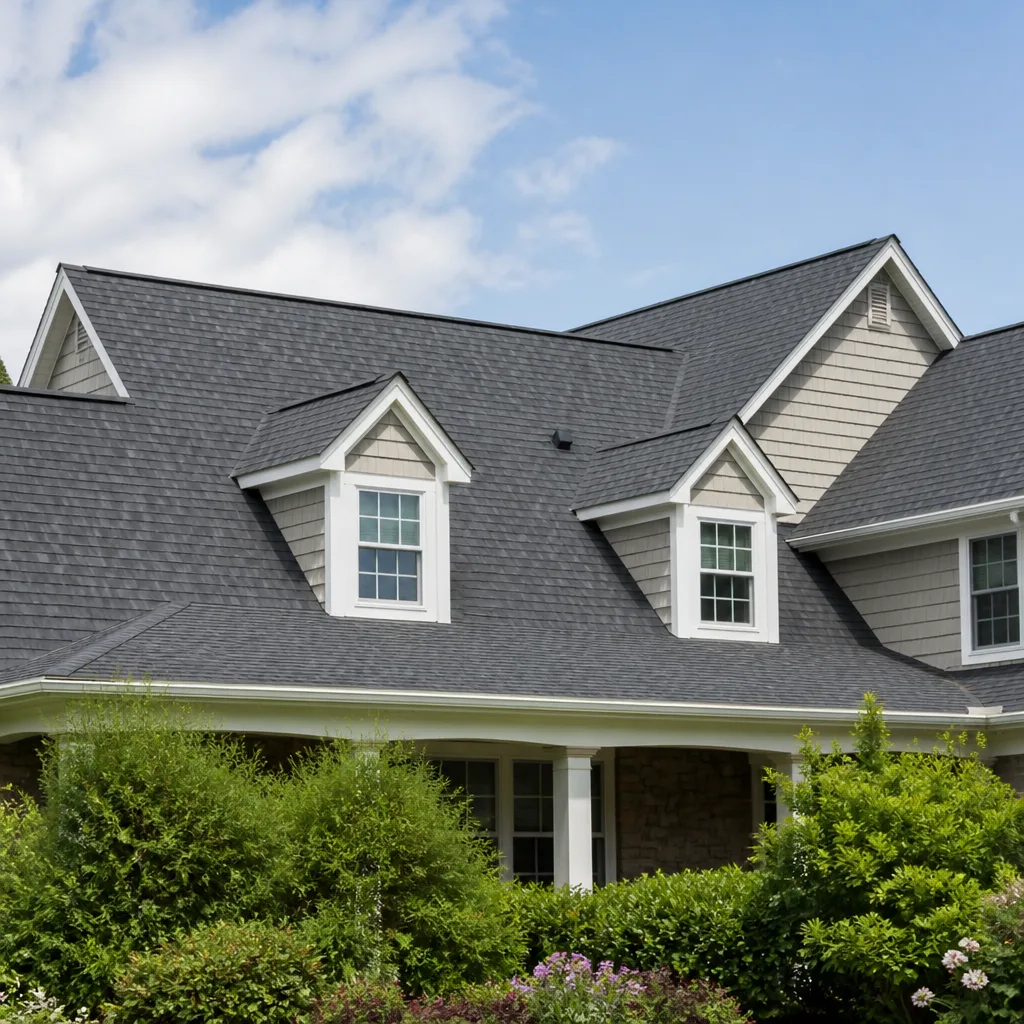
- Roof replacement or repair. Shingle adhesive from brands like Owens Corning and Atlas needs dry heat to seal properly. A roof installed in June can take weeks to seal if afternoon storms keep soaking it.
- Foundation and slab inspections. Florida’s sandy soil drains fast in the dry months, which makes it easier to see settlement cracks, termite tunnels, and moisture staining that the wet season actively hides.
- Window and door replacement. Flashing and sealant need clean, dry surfaces. Wet-season installs risk trapped moisture behind the flange, which leads to rot inside the rough opening.
- Stucco repair and resealing. Orlando’s stucco homes are everywhere, from College Park to Conway, and stucco absorbs water like a sponge. Repair patches must be fully dry before painting over them.
Our crews see the same pattern every year: homeowners wait until a leak or a crack becomes undeniable in August, and then they wonder why quotes are higher and wait times are longer. Everyone in Orlando has the same problem at the same time. Schedule the dry-season work in the dry season and you’re ahead of the rush.
Wet Season Prep (June – September): What to Do Before the First Storm
By the time the first named storm forms in the Atlantic, you’re already too late for the most effective wet-season prep. The work that protects a house in June, July, August, and September needs to happen in April and May, when the ground is still firm and the forecast still gives you working days. Here’s the pre-June checklist, in order of impact per dollar spent.
- Gutters and downspouts: clean them, then test them. A 5-inch gutter moving water away from the foundation is the cheapest flood insurance you’ll ever buy. Run a hose through each run and watch where the water exits. If it pools within three feet of the slab, extend the downspout or add a splash block.
- Check French drains and surface drains. Orlando yards that slope toward the house, or homes on flat lots in neighborhoods like Audubon Park, depend on drains that quietly clog with grass clippings and landscape debris. Clear inlet grates and flush the line with a hose. A French drain full of silt is just a buried pipe.
- Seal check: windows, doors, pipe penetrations. Run a bead of exterior-grade silicone around window frames and door thresholds. Check the caulk around hose bibs, AC line sets, and any pipe that passes through the exterior wall. A 1/8-inch gap leaks more water in a month of Orlando storms than most people think possible.
- Confirm your roof has no lifted shingles or cracked flashing. Wind-driven rain finds every opening. A lifted shingle tab that looks minor in April becomes a ceiling stain by August. Walk the roof or have it inspected before the daily storm cycle starts.
- Test your sump pump or lift station if you have one. Homes near Lake Eola or in other low Orlando areas sometimes have pump-assisted drainage. Pour a five-gallon bucket into the pit and confirm it cycles. Replace the battery backup if it’s over two years old.
One thing we hear from Orlando homeowners again and again: they think wet-season prep is about reacting to storms. It isn’t. It’s about removing the conditions that storms exploit. Dry ground, clear drainage, intact seals, and a sealed roof turn a monsoon into noise.
Why Humidity, Not Heat, Is the Real Enemy in Orlando
Northern transplants expect heat to be the problem in Florida. It isn’t. Heat makes people uncomfortable; humidity destroys buildings. Orlando’s average relative humidity sits near 74% year-round, and during the wet season it hovers above 80% for weeks at a time. At that level, building materials behave differently. Wood absorbs moisture and swells. Drywall absorbs moisture and grows mold. Paint and caulk fail at the bond line. Metal flashings corrode. The AC system, which was never designed to pull 80% humidity out of the air indefinitely, runs harder and wears faster.
The predictable annual pattern looks like this:
- April – May: Humidity rises. Condensation appears on windows and duct boots. That’s the first warning that seals and insulation are working harder than they should.
- June – September: Sustained humidity. This is when mold, mildew, and wood rot hit their peak. Bathroom exhaust fans that aren’t vented to the exterior push moisture into attics. Crawlspaces and stucco walls stay damp for weeks.
- October – November: Transition. The air dries slightly. Cracks open in wood trim and caulk lines as material shrinks. That’s the time to catch and repair before the cycle repeats.
The practical takeaway in Orlando: any construction upgrade that manages moisture is worth more than one that manages temperature. A properly sized dehumidifier, a bathroom exhaust fan vented to the outside, upgraded attic ventilation, sealing crawlspace floors, a vapor barrier on the slab. These changes have a return that compounds. The weather doesn’t give Orlando homes a break, but the homes that anticipate the humidity cycle stay dry while the ones that don’t start peeling and staining within three to five years. As part of Home Renovation in Orlando, moisture control belongs in the scope from day one, not as an afterthought.
Hurricane Season Overlap: Block Homes vs. Wood-Frame Homes
Hurricane season in Orlando runs June 1 through November 30, and it overlaps almost exactly with the wettest months. That’s not a coincidence; it’s the same atmospheric engine. What matters for Orlando homeowners is that block homes and wood-frame homes fail in different ways, and they need different prep.
Block homes (CMU or concrete masonry units): The vast majority of Orlando homes built after 1970 are block on slab. The walls are not going to blow over, but the roof is the weak point. A block house in a hurricane fails at the roof-to-wall connection, at the gable ends, and at the garage door. If the garage door blows inward, the pressure inside the house spikes and the roof lifts. What block homes need before June: hurricane-rated garage door bracing or replacement, roof straps or clips verified at the truss-to-wall connection, and gable-end bracing if the house has a gable roof. Secondary concern: wind-driven rain penetration through stucco cracks. Stucco is porous, and once water gets behind it, it stays there.
Wood-frame homes: Common in older Orlando neighborhoods like Thornton Park and Delaney Park, wood-frame homes face a different set of problems. The walls themselves can flex under wind load, and they rot when wet-season moisture finds its way behind siding. A wood-frame home needs a siding inspection before June: any lifted lap siding, any soft section at the band joist, any gap in the house wrap. Water that gets behind siding in June doesn’t dry until October, and in a wood-framed wall, that means rot. For frame homes, hurricane prep also includes confirming the roof sheathing is nailed to code, not just stapled. Homes built before the 2002 Florida Building Code often have insufficient sheathing fasteners, and that’s what peels off in high wind.
A General Contractor in Orlando who knows the difference between a block home and a frame home is the difference between prep that addresses the actual structure and prep that just checks boxes. In Orlando, both types exist side by side, sometimes on the same street.
The Late October Window: When Contractors Actually Answer the Phone
Here’s a piece of Orlando-specific insider knowledge most homeowners never hear: the third and fourth weeks of October are the least backlogged weeks of the year for HVAC, roofing, and exterior contractors. There’s a reason for it. The summer emergency rush is over. The autumn snowbird projects haven’t started. The pre-holiday interior rush hasn’t kicked in yet. The rain has mostly stopped but the ground is still warm enough for exterior work. Concrete still cures, roof adhesive still seals, paint still flows.
If you’ve been putting off a roof inspection, a siding repair, a repaint, or an HVAC replacement, calling in mid-to-late October gets you something you won’t get in March or June: scheduling flexibility and sharper pricing. Contractors are hungry for work in those two weeks because the phone goes quiet. By mid-November, Orlando’s seasonal population starts calling again, and by December the holiday slowdown hits. Late October is the sweet spot, and it comes around once a year.
Mark your calendar for the second week of October and start making calls. Even if you end up scheduling the work for November or December, you’ll get into the books ahead of the wave.
Month-by-Month Maintenance Calendar for Orlando
If you want a single reference for what to do when in Orlando, this is it. This calendar is built around the wet/dry binary and the contractor-availability cycle, not a generic seasonal checklist from a national home-improvement site.
January – February
Dry season, cooler temperatures, low contractor backlog. This is the time for interior projects: bathroom remodels, kitchen work, flooring. The weather outside is irrelevant because the work is inside, and contractor availability is better than spring. Roof inspections are also easy to schedule now, before the March rush.
March – April
The spring rush starts. Contractors book up fast, so if you want exterior work done before the rains, call by early March. April is the last reliable month for exterior painting and roofing before the daily storms return. Late April is also the right time for the wet-season prep checklist above: gutters, drains, seals, roof check.
May
Final window for exterior work before the wet season. If your roof, siding, or stucco hasn’t been inspected by mid-May, you’re rolling the dice. May is also the month to service the AC before the first 95-degree, 80% humidity stretch hits in June. An AC that fails in May can be replaced in days. An AC that fails in August can take weeks.
June – September
Wet season. This is when you run the maintenance you already did: clear gutters after storms, check for leaks after heavy rain, listen for roof drips at night. Major exterior projects should be avoided. Interior emergency repairs happen because they have to, not because this is a good time. It’s also the heart of hurricane season, so keep the drain system clear and the garage door braced.
October
The golden window. By the second week of October, the afternoon thunderstorms have mostly stopped and the contractor backlog has thinned. Book your exterior work now: painting, roofing, stucco, siding, sealing. If you need a bathroom remodel done before the holidays, October is the month to start it. A Bathroom Remodeling in Orlando project started in October finishes before Thanksgiving.
November – December
Holiday slowdown, but still dry. Late-season exterior work is possible if you got on the books early. This is a good time for smaller punch-list items: caulking, touch-up painting, gutter cleaning before the winter fronts. By mid-December, most construction crews are wrapping up for the year, so plan accordingly.
Interior Projects That Follow the Same Wet/Dry Logic
Most homeowners think of seasonal construction care as an exterior concern. It isn’t. Interior remodeling in Orlando is directly affected by the humidity cycle, and smart homeowners time their projects around it the same way they time a roof job.
Bathroom remodels are the clearest example. A bathroom demo in June means opening a wall in a house that’s already at 80% humidity. The framing inside that wall may be damp before you even open it. Setting tile, grouting, and caulking in a humid house means longer cure times and a higher chance of grout haze, caulk that won’t skin over, and drywall mud that stays soft for days. The same remodel in November, when the humidity drops into the 50s and 60s, moves faster and finishes cleaner.
Hardwood and engineered flooring follows the same rule. Wood floors in Orlando should be acclimated in the house for 72 hours before installation, and the install date should be scheduled when the indoor humidity is at its most stable. October through March is the window. Installing a wood floor in July means putting down boards at their maximum expansion size, and when the house dries out in November, the floor shrinks. That’s how you get gaps along the baseboards.
Paint and drywall work inside the house also benefits from dry-season scheduling. Joint compound, latex paint, and caulk all cure by evaporation. In a humid house, that evaporation slows to a crawl, and the result is soft patches, tacky paint days after application, and caulk lines that smear. If you’re doing whole-home renovation work, plan the messy interior phases for the dry months and reserve the wet months for design, permitting, and product selection. Sawyer Remodel Orlando home projects are planned around this calendar because the calendar changes how the work actually goes.
Common Mistakes to Avoid
- Following a northern maintenance calendar. Orlando homeowners who seal their driveways in October, paint in May, and service the furnace in October are transplanting advice from an entirely different climate. Seal the driveway when it’s dry. Paint when it’s dry. There is no furnace, and the AC service happens in May, before the heat hits.
- Ignoring gutters until there’s a problem. In a city that gets 50+ inches of rain in four months, gutters aren’t a cosmetic feature. A clogged gutter in Orlando means water sheeting over the fascia, down the wall, and into the stucco or siding. By the time you see the stain inside, the framing has been wet for weeks.
- Assuming block homes are waterproof. Block is strong, but it is not waterproof. Stucco over block is a sponge, and a block home with cracked stucco and no paint seal will wick water through the wall during every afternoon storm. That water ends up on the drywall inside, just the same as a leaky roof.
- Waiting until the leak appears to fix the roof. In Orlando, a roof leak that shows up in August probably started as a lifted shingle in March. Wind-driven rain finds every small opening, and the wet season gives it four months to work. Annual roof inspections in the dry season are cheaper than ceiling repair in the wet season.
- Running the bathroom exhaust fan into the attic. This is a Florida-specific code violation we see constantly in older Orlando homes. A bathroom fan that vents into the attic is pumping warm, wet air into a hot, dark space. That’s a mold factory. The fan needs to terminate outside through a roof cap or soffit vent.
- Scheduling exterior work based on price instead of season. A painter who offers a cheap rate in July is offering a cheap rate for a reason: the work will be rushed between storms, the paint will cure poorly, and the job won’t last. Exterior work pays for itself in longevity when it goes on in dry conditions.
- Forgetting the garage door in hurricane prep. The garage door is the single largest opening in most Orlando homes, and a standard unbraced door can fail in a Category 1 storm. Once it goes, the internal pressure spikes and the roof becomes a sail. It’s the cheapest structural upgrade with the biggest return.
When to Call a Professional
Some seasonal maintenance is a homeowner’s job: cleaning gutters, clearing drain grates, checking caulk. But if you find a roof leak, a foundation crack wider than 1/8 inch, water staining on ceilings or walls, a shutter or garage door that won’t brace properly, or any sign of wood rot in the fascia or soffits, call someone who does this work full time. The same goes for the pre-season structural check: block home or wood frame, a professional eye catches what a ladder and a flashlight miss. Sawyer Remodel Orlando offers free estimates in Orlando, and every project runs under The Relay Standard: a written price before work starts, live arrival time, and photo updates before and after. Call (850) 809-0306 to schedule your free estimate.
Frequently Asked Questions
Most roofing contractors in Orlando charge $200 to $400 for a full roof inspection, and many will apply that fee toward repair work if you move forward. In the dry season, some companies offer free inspections as a way to fill their schedule. An annual inspection is cheaper than a wet-season leak repair.
October through March is the best window for exterior painting in Orlando, with October and November offering the most reliable stretch of dry, warm days. Avoid painting between June and September, when humidity above 80% prevents latex paint from curing properly and afternoon storms constantly interrupt work.
Orlando is far enough inland that storm surge isn’t a threat, but wind is. The Florida Building Code requires new homes to have impact-resistant windows or shutter-ready openings. If your home was built before 2002, shutters or impact glass are worth considering for window and door protection during the June – November hurricane window.
In Orlando, gutters should be cleaned twice a year: once in late April before the wet season starts, and once in November after the leaves fall. Homes under heavy tree cover in neighborhoods like Winter Park or College Park may need a third cleaning in mid-summer. A clogged gutter in Orlando’s rain season causes fascia rot fast.
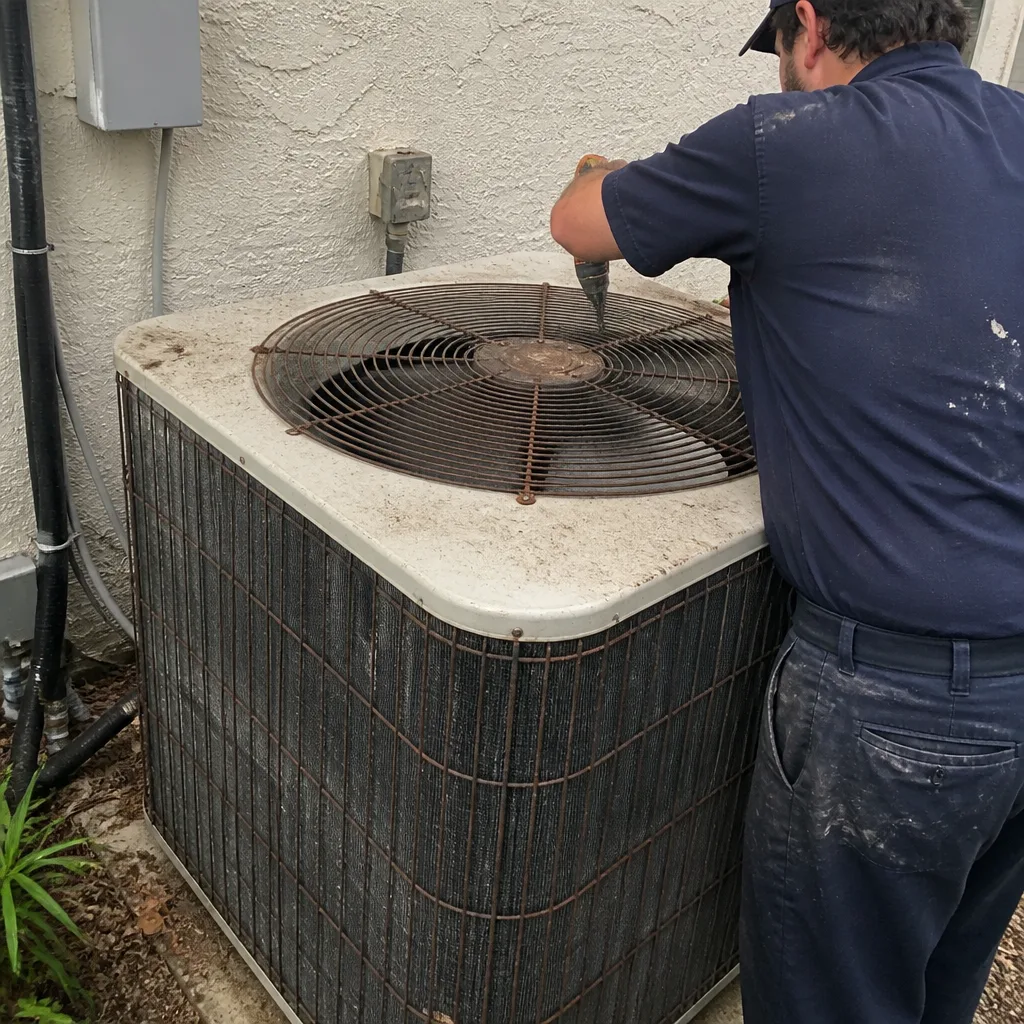
In Orlando, the AC isn’t just cooling the air; it’s dehumidifying 80% humidity for months on end. That’s a continuous, heavy load. If the system isn’t sized correctly for the home’s square footage, or if the ductwork is leaking into the attic, the system runs constantly and still can’t hold the setpoint. A Manual J load calculation is the fix, not another refrigerant top-off.
Orlando bathroom remodels typically range from $12,000 to $35,000 depending on scope, fixtures, and whether the layout changes. A cosmetic refresh with a new vanity, toilet, and finishes starts near the lower end, while a full gut with tile, glass, and plumbing relocations runs higher. Call (850) 809-0306 for an exact quote. Estimates are free, and the written price is fixed before work starts.
The Bottom Line
Orlando homes don’t fail from heat; they fail from water and the quiet work of humidity. The homeowners who thrive here stop fighting the calendar and start working with it: dry season for exterior construction and interior remodeling, wet season for maintenance and monitoring, late October for the best contractor availability and pricing. The goal isn’t to be a hero during hurricane warnings; it’s to have the house ready before the warnings ever arrive. Plan around the two-season reality, keep drainage and seals in shape, and the rest of the year takes care of itself. Explore more guides & resources for year-round Orlando home maintenance.
Written by Luca Romano, Owner at Sawyer Remodel Orlando, serving Orlando since 2005.
See the difference
 Before
 After
After Before
 After
After Before
 After
After