Last updated October 16, 2026








Free written scope consultation - allowances, timeline, and change-order rules on paper before a single trade is scheduled
DIY vs Professional Construction: The Orlando Homeowner’s Decision Guide
In Florida, a homeowner who does their own electrical work without a permit and sells the house five years later can be held liable for unpermitted work discovered at closing, even if the buyer never asked about it. That’s not a hypothetical. It’s Florida Statute 489 in action, and it changes the DIY math completely. Most guides tell you to “know your limits.” This one-along with our more guides & resources-gives you the legal framework, the insurance reality, and the honest skill-and-risk breakdown for Orlando specifically. By the end, you’ll know exactly which projects you can legally and safely tackle yourself, which ones Florida law reserves for licensed professionals, and where Orlando’s climate and housing stock tip the scales.
Styles & brands we work with







Quick Answer
In Orlando, DIY is legally and practically sensible for cosmetic work like painting, trim, flooring, and basic drywall repair. It becomes a liability for anything touching electrical, plumbing, roofing, structural framing, or HVAC, where Florida law requires a licensed contractor and unpermitted work can void your insurance and stall a future sale. For mid-level projects like tile or drywall finishing, the decision comes down to honest skill assessment and how much a do-over will cost you in Orlando’s current labor market. Our How to Hire a Construction Contractor in Orlando: A Step-by-Step Guide can help if you decide to go pro.
Table of Contents
- What Florida Law Actually Says About DIY Construction
- The Insurance Liability Gap Most Orlando Homeowners Miss
- The Honest Skill-and-Risk Matrix: Orlando’s Most Common Remodel Tasks
- The True Cost of DIY in Orlando: Tools, Waste, Permits, and Do-Overs
- Projects That Require a Licensed Pro in Florida, No Matter Your Skill Level
- The Orlando Permit Reality: Which Permits You Can Pull and Which You Can’t
- A Step-by-Step Decision Framework for Any Project
- Common Mistakes to Avoid
- When to Call a Professional
- Frequently Asked Questions
- The Bottom Line
What Florida Law Actually Says About DIY Construction
Florida Statute 489 is the governing law here, and it draws a bright line. If you’re working on your own primary residence and you’re not selling or leasing it within one year of completion, you can act as your own “owner-builder” and pull permits for most construction work. That’s the homeowner-builder exemption, and it’s generous compared to most states. But there’s a catch that changes everything for Orlando homeowners.
The exemption applies to work on a property you own and occupy. It does not apply to rental properties, investment properties, or any home you plan to sell within 12 months. In Orlando’s fast-moving real estate market, where homeowners routinely buy, renovate, and list within two years, that 12-month clock matters more than most people realize. See our Seasonal Construction Care for Orlando: Year-Round Homeowner’s Guide for timing considerations. Sell too soon, and your unpermitted or owner-builder work becomes a closing-table problem.
Beyond the statute, Florida building codes have specific trade requirements. Electrical work must meet the National Electrical Code as adopted by Florida. Plumbing must meet the Florida Plumbing Code. Roofing must comply with the Florida Building Code’s high-velocity hurricane zone provisions, which in Orlando means wind mitigation requirements that are stricter than in most of the country. A homeowner can technically pull a permit for many of these as an owner-builder, but the code compliance burden is real, and inspectors in Orange County and Seminole County do not give homeowners a pass for good intentions.
What this means in practice: you can legally hang your own drywall, lay your own tile, paint, trim, and replace fixtures. You can pull a permit as an owner-builder for a bathroom remodel if you’re doing the work yourself. What you cannot do legally without a licensed contractor is perform work that your homeowner’s insurance policy explicitly excludes from coverage when self-performed, which brings us to the next section. For a full list of what pros should handle, check our General Contractor Maintenance Checklist for Orlando Homeowners.
The Insurance Liability Gap Most Orlando Homeowners Miss
Here’s the part that rarely makes it into DIY guides. Your Florida homeowner’s insurance policy has specific exclusions for work you do yourself, and those exclusions bite hardest in Orlando’s climate. A DIY plumbing repair that fails and floods your home can trigger a denial of the water damage claim if the insurance company determines the work was performed by an unlicensed person and caused the loss. That’s not a minor inconvenience. That’s a five-figure or six-figure repair bill with no coverage.
The same logic applies to electrical work. If you rewire a circuit yourself and it causes a fire, the fire investigator’s report will note the unpermitted work, and your insurer has grounds to deny the claim. Florida courts have consistently upheld these exclusions when the policy language is clear. We’ve seen this happen in Orlando neighborhoods like Conway and Audubon Park, where older homes with outdated electrical systems are common and DIY electrical work is tempting.
Roofing is even more stringent. Florida property insurers now require wind mitigation inspections and documentation of proper installation. A DIY roof repair that fails during one of Orlando’s summer afternoon thunderstorms can void coverage for the entire roof system. Given that Orlando sits in a wind-borne debris region and insurers are already scrutinizing roof claims heavily, self-performed roof work is a gamble with catastrophic downside.
The practical takeaway: for any project where a failure could cause water damage, fire, or structural compromise, your insurance policy is effectively making the decision for you. The savings from DIY disappear the moment a claim gets denied.
The Honest Skill-and-Risk Matrix: Orlando’s Most Common Remodel Tasks
Let’s look at the five most common remodel tasks in Orlando homes and give each an honest assessment of DIY viability. This is based on what we see in the field, not a generic skill-level discussion.
Tile Work: DIY-Friendly with a Steep Learning Curve
Tile work sits right on the line. Basic floor tile in a low-traffic area is achievable for a careful homeowner with the right tools. But Orlando’s humidity and slab-on-grade foundations create specific challenges. Most Orlando homes are built on concrete slabs, which means tile goes directly onto concrete. Any slab movement, which is common in Florida’s sandy soil, telegraphs through the tile as cracks. A professional installation includes crack isolation membrane and proper expansion joints. A DIY job usually skips both, and the tile fails within two years.
For showers and wet areas, the waterproofing is the actual job, not the tile. Products like Schluter edge trim and Schluter waterproofing membranes are the industry standard, and they require specific installation techniques. Get the waterproofing wrong and you’re looking at mold behind the tile in Orlando’s humid climate, which means demolition and full redo. We recommend DIY for floor tile in dry areas only. Everything wet-surface gets a professional.
Drywall: DIY-Friendly for Patching, Risky for Full Rooms
Small drywall patches and repairs are squarely in the DIY zone. Hanging a full room or finishing butt joints to a level-four smooth finish is a different animal. In Orlando’s heat, drywall mud flashes over faster, which means less working time before it sets. The texture matching on Orlando homes built in the 1980s and 1990s, many of which use knockdown or orange peel texture, is genuinely difficult to replicate. A bad texture match is visible from across the room and requires skimming the entire wall to fix.
Electrical Rough-In: Not DIY, No Exceptions
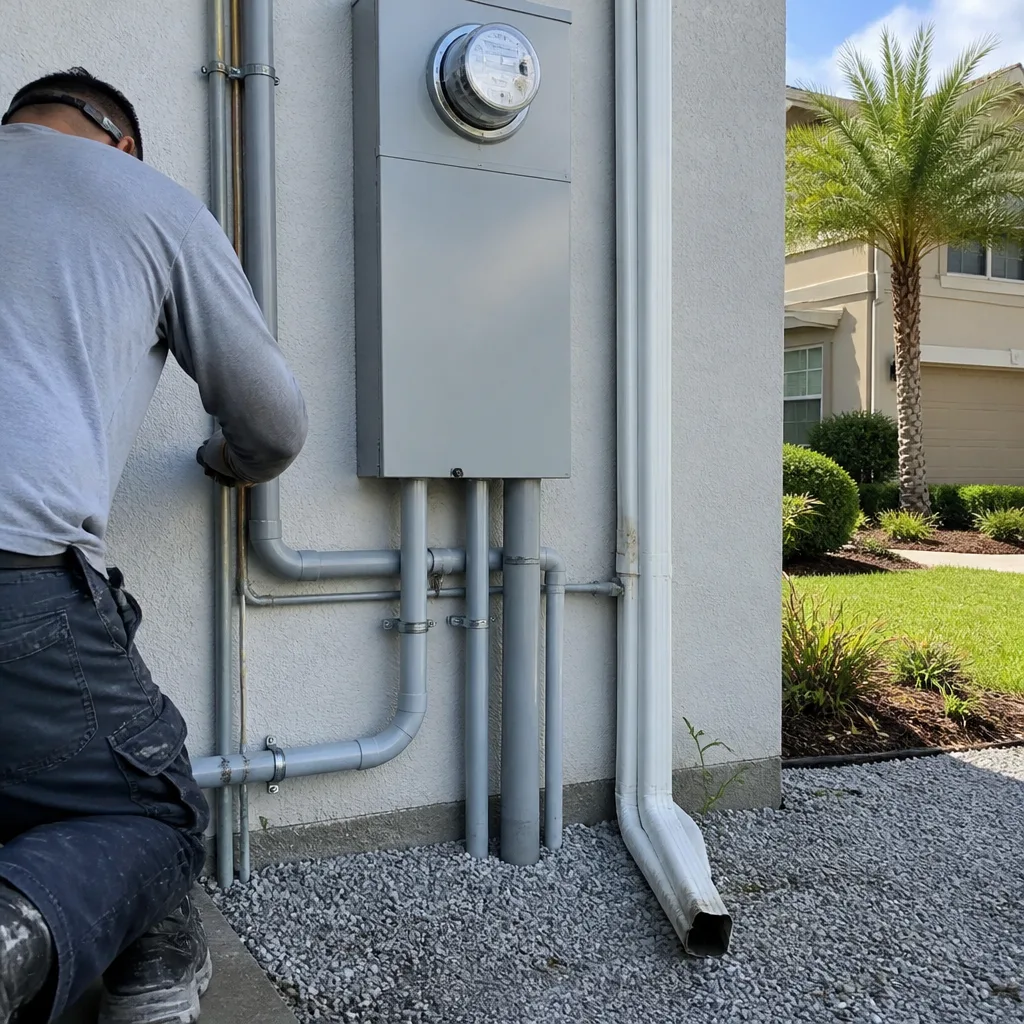
This one is not a skill discussion. Electrical rough-in in Florida requires a licensed electrician for any new circuit, panel work, or service upgrade. The risk of fire, the code requirements for arc-fault and ground-fault protection, and the insurance implications make this a hard no for DIY. Replacing a light fixture or a switch is fine. Running new wire is not.
Plumbing: DIY for Fixtures, Not for Piping
Swapping a faucet, replacing a toilet, or installing a new showerhead are legitimate DIY tasks. Moving drain lines, rerouting supply lines, or touching the main stack is licensed-plumber territory. In Orlando, many homes have cast iron drain lines that are reaching end of life. A DIY attempt to patch cast iron with PVC couplings is a temporary fix that fails, and then you’re paying a plumber emergency rates plus the cost of repairing your attempted repair.
Roofing: Not DIY, Period
Florida’s building code requires licensed roofing contractors for any roof replacement and most repairs. The wind mitigation and fastening requirements are specific and enforced. A DIY roof repair in Orlando is illegal in most cases and voids your insurance coverage even when it is technically permitted as an owner-builder repair. This is not a skill issue. It’s a legal and insurance issue.
The True Cost of DIY in Orlando: Tools, Waste, Permit Fees, and Do-Overs
The DIY vs. pro comparison usually starts and ends with labor. That’s a false comparison. Labor is one line item. A real comparison includes everything else, and in Orlando, those other line items add up faster than most homeowners expect.
Tool Costs Are Real and Non-Refundable
A basic tile job requires a wet saw, a tile cutter, mixing paddle, trowels, spacers, leveling system, and grout float. A decent wet saw runs $200 to $400 for a rental-grade model. Add a laser level at $100 to $200. You’re at $500 before you’ve bought a single tile. For a one-time bathroom remodel, renting makes sense. But rental windows in Orlando are often 24 hours for specialty tools, which means you’re renting twice when the job runs long, and it will run long on a first attempt.
Material Waste Runs 15-25% for First-Timers
A professional tile installer orders 10% overage for cuts and waste. A first-time DIY installer typically wastes 20% to 30% because mistakes on cuts, broken pieces, and layout changes mean more material gets discarded. On a 200-square-foot tile job at $4 per square foot, that’s $160 to $240 in wasted material alone. The same math applies to drywall, trim, and flooring.
Permit Fees Apply Either Way
Pulling a permit as an owner-builder does not waive the permit fee. In Orange County, permit fees for a bathroom remodel or kitchen remodel run in the hundreds of dollars, and the fee structure is the same whether you’re a homeowner or a contractor. What’s different is the inspection process. A contractor knows what the inspector is looking for and schedules inspections in the right order. A homeowner navigating that process for the first time often fails an inspection, and each re-inspection carries an additional fee.
Do-Over Risk Is the Silent Killer
This is the cost nobody budgets for. In Orlando’s current construction market, contractors are fully booked and correction work carries a premium. If you start a DIY project and it goes sideways, the cost to have a professional fix it is typically 1.5 to 2 times the cost of having them do it from the start. Why? Because they have to undo your work first, diagnose what’s wrong, and then build it correctly. We’ve seen homeowners spend $3,000 on DIY shower waterproofing materials and tools, fail the flood test, and then pay $8,000 for a full tear-out and professional rebuild. That’s a $3,000 learning experience, and the lesson is expensive.
Projects That Require a Licensed Pro in Florida, No Matter Your Skill Level
There are certain projects where skill level is irrelevant. Florida law and code requirements make these licensed-professional-only work, and no amount of YouTube research changes that.
- Roof replacement or structural roof repair. Florida Statute 489 requires a licensed roofing contractor for roof replacement. The wind mitigation and fastening requirements are too specific and too consequential to self-perform.
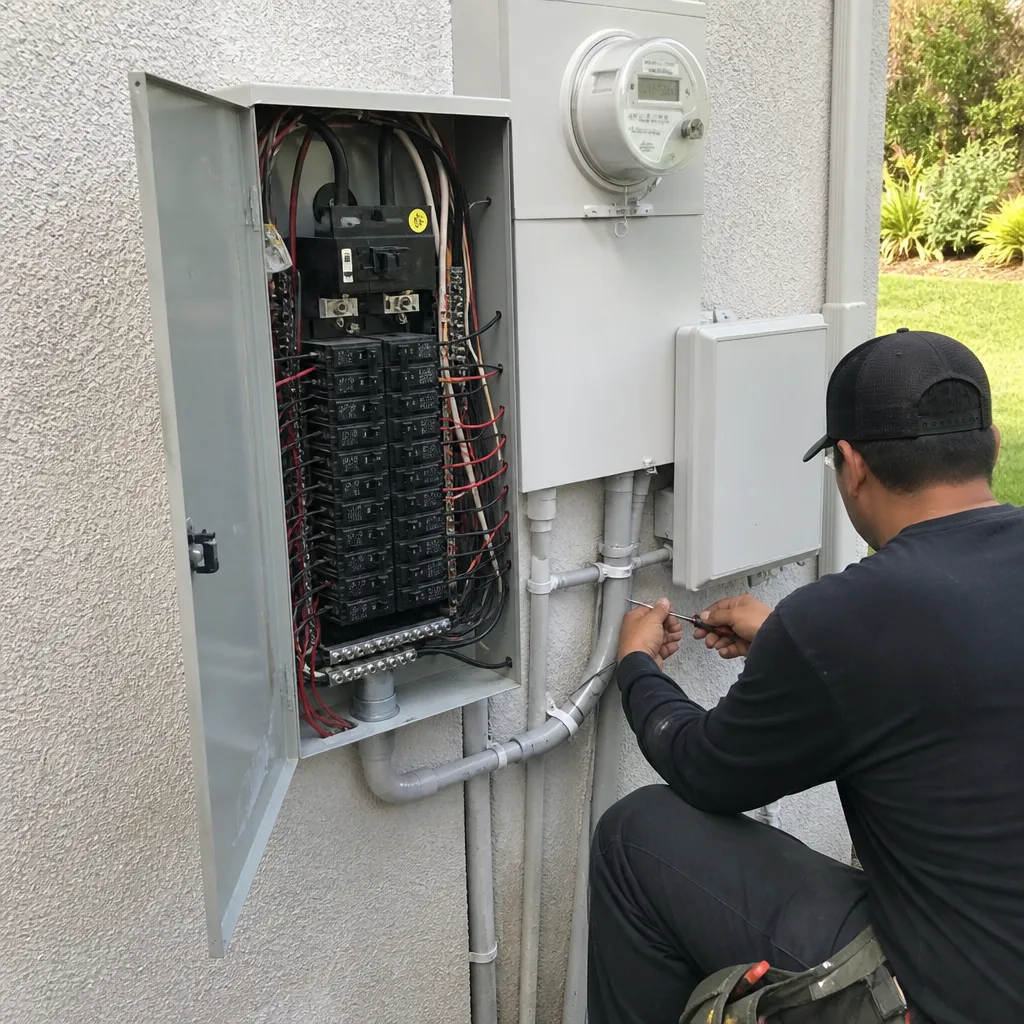
- Any electrical panel work or new circuit installation. This requires a licensed electrician and a permit. The fire risk and insurance implications are absolute.
- Gas line work of any kind. In Orlando, natural gas and propane line installation and repair require a licensed plumber or gas contractor. A gas leak in a Florida slab home pools in enclosed spaces and creates an explosion hazard.
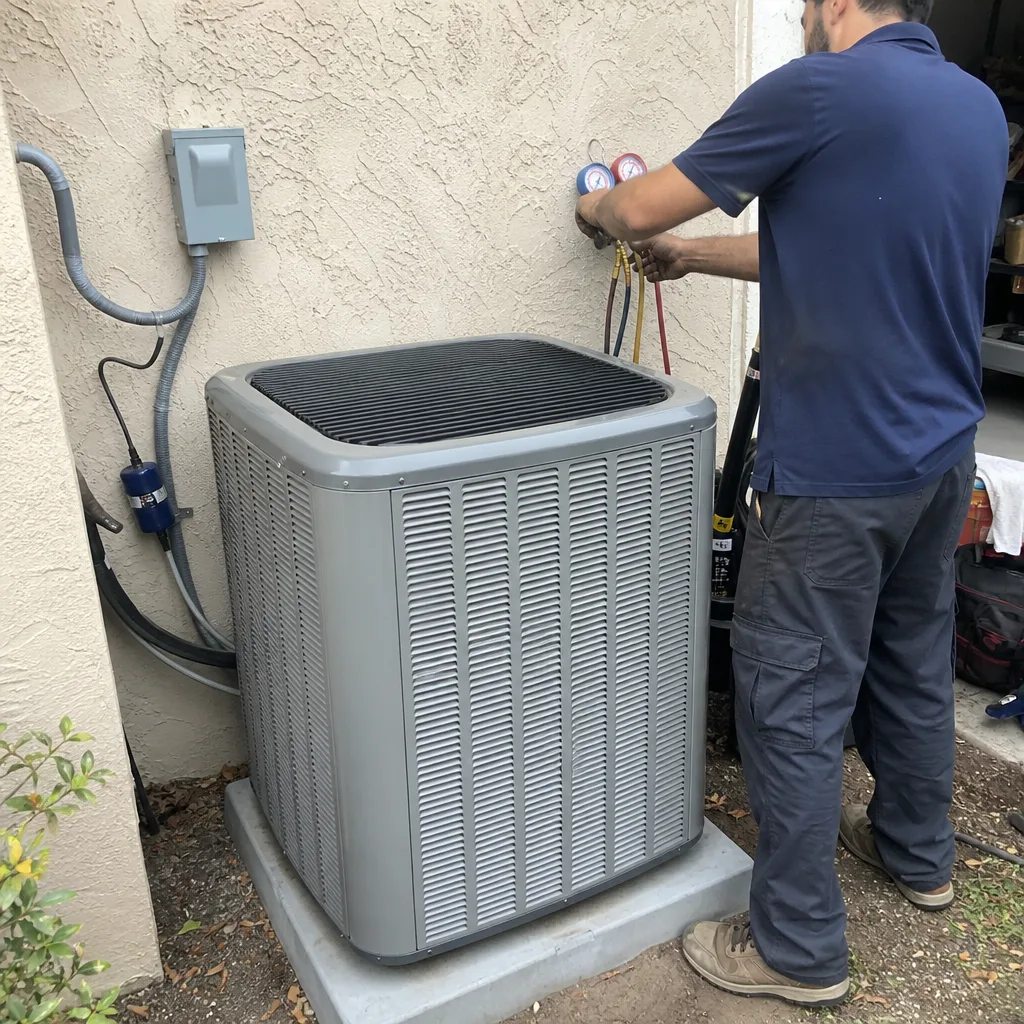
- HVAC system replacement or new ductwork. Florida requires licensed HVAC contractors for system replacement and new duct installation. The refrigerant handling alone is federally regulated.
- Structural changes to load-bearing walls. Removing a load-bearing wall requires an engineer’s analysis and a licensed contractor or structural specialist. In Orlando’s older homes, especially 1950s and 1960s concrete block construction, load paths are not always obvious.
- Any work on a multi-family building you own but don’t occupy. The homeowner-builder exemption only applies to your primary residence. Rental properties, duplexes you own, or any income property requires licensed contractors for all permitted work.
The Orlando Permit Reality: Which Permits You Can Pull and Which You Can’t
In Orlando proper, the city’s Building Department issues permits for work within city limits. Unincorporated Orange County handles permits through its own building division. The rules are similar but not identical, and the jurisdictional boundary matters. If you’re in neighborhoods like Baldwin Park, College Park, or Thornton Park, you’re under city jurisdiction. If you’re in areas like Conway, Azalea Park, or Pine Hills, you may be under county jurisdiction.
As an owner-builder, you can pull permits for most residential work on your primary residence: remodels, additions, roof replacement, window replacement, and interior renovations. The key restrictions are that you must do the work yourself or hire licensed subcontractors, and you can’t sell or lease the property within 12 months of completion.
What you can’t do is pull a permit for work you’re not actually performing. If you act as your own owner-builder but then hire unlicensed workers to do the work, that’s illegal and the liability lands on you personally. In Orlando, where unlicensed handyman activity is common, this is a frequent problem. Homeowners think they’re saving money by pulling the permit themselves and hiring cash workers. They’re actually creating a situation where they bear all legal responsibility for work performed by people who have no liability insurance and no bond.
The practical answer to “which permits can I pull” is: most of them, but only if you’re genuinely doing the work yourself and you have the skills to pass inspection. If you’re planning to hire help, the permit should be in the contractor’s name, and that contractor should be licensed and insured. Our General Contractor in Orlando page explains how the permitting process works when a licensed GC handles it, which is the path we recommend for any project involving multiple trades.
A Step-by-Step Decision Framework for Any Project
Here’s the framework we use when homeowners ask us whether a project is a good DIY candidate. Walk through these steps in order.
- Is this project legally DIY-able in Florida? If it involves electrical, plumbing beyond fixtures, gas, roofing, HVAC, or structural work, the answer is no and you stop here. Call a licensed contractor.
- Would a failure cause water damage, fire, or structural compromise? If yes, ask your insurance agent what happens if self-performed work causes a loss. If the answer is “denial,” the decision is made for you.
- Can you realistically complete it in one weekend? Projects that drag on for weeks in an occupied home create stress, dust, and schedule disruption that has real cost. If it’s a multi-week job, factor in the disruption cost.
- Do you own the specialized tools, or can you rent them cost-effectively? Add up the tool cost and compare it to the labor you’d pay a professional. The gap is usually smaller than expected.
- If you fail, what’s the correction cost? In Orlando, correction work runs 1.5 to 2 times normal rates. If the do-over risk is high, professional from the start is the cheaper path.
- Will this project require a permit and inspections? If yes, and you’re not confident in your code knowledge, the permitting and inspection process alone is a strong argument for professional help.
This framework won’t give you the answer for every situation, but it will eliminate the projects that are clearly bad DIY candidates and surface the ones where the decision is genuinely close.
Common Mistakes to Avoid
- Pulling a permit as an owner-builder and hiring unlicensed workers. This is the most common and most serious mistake we see in Orlando. You are personally liable for everything, and the workers have no insurance. If someone gets hurt on your property, your homeowner’s insurance may not cover an injury to an unlicensed worker.
- Skipping waterproofing on Orlando bathroom remodels. The humidity in Orlando means waterproofing failures show up fast in the form of mold and tile failure. A DIY shower without proper waterproofing membrane, like the Schluter system, is a time bomb.
- Doing electrical work anywhere near a water source without GFCI protection. Orlando homes have specific GFCI requirements for bathrooms, kitchens, outdoor outlets, and any receptacle within six feet of a sink. Old homes in neighborhoods like Delaney Park often lack these protections, and DIY work that doesn’t add them is a code violation and a shock hazard.
- Ignoring the 12-month owner-builder resale restriction. If you plan to sell your Orlando home within a year, doing work as an owner-builder creates a closing disclosure problem. Buyers in this market are represented by agents who ask about unpermitted work, and Florida sellers now have specific disclosure obligations.
- Underestimating the Florida heat and humidity during outdoor projects. Orlando summers are brutal, and DIY projects like decks, patios, and exterior painting in June through September carry heat exhaustion risk. Production slows down, materials like caulk and paint behave differently, and the finished quality often suffers.
- Mixing DIY and professional work without clear scope boundaries. If you do the demo and the contractor does the rebuild, the contractor’s liability is limited to their portion. If the demo was done wrong and causes a problem, you own that problem. Clarify the scope before work starts.
When to Call a Professional
Call a professional when the project touches electrical, plumbing beyond fixture swaps, roofing, structural changes, gas lines, or HVAC. Call one when a failure would cause water damage or fire. Call one when the permit and inspection process feels overwhelming. And call one when the do-over risk exceeds the labor savings.
If you’re planning a Bathroom Remodeling in Orlando or a larger Home Renovation in Orlando, the decision is usually made for you by the scope of work involved. These projects touch multiple trades, require permits, and carry real financial downside if done wrong. Sawyer Remodel Orlando offers free estimates in Orlando, and we put the price in writing before any work starts. Call (850) 809-0306 to talk through your project and get a number you can actually plan around.
Frequently Asked Questions
Florida’s homeowner-builder exemption allows you to act as your own contractor and pull permits on your primary residence, provided you do the work yourself or hire licensed subcontractors and don’t sell or lease within 12 months. Practically, this covers painting, flooring, trim, basic drywall, fixture replacement, and other non-structural, non-mechanical work. Electrical, plumbing beyond fixtures, gas, HVAC, and roofing are restricted to licensed professionals regardless of skill.
A full bathroom remodel in Orlando typically runs $15,000 to $35,000 depending on size, fixture selections, and whether you’re moving plumbing. A cosmetic refresh with new tile, vanity, and fixtures but no plumbing changes can come in under $15,000. These are honest Orlando market ranges based on current material and labor costs. For an exact number on your specific bathroom, call (850) 809-0306 for a free written estimate.
No, in most cases it will not. Florida insurance policies typically exclude losses caused by unlicensed or unpermitted work. A DIY plumbing failure that floods your home or a DIY electrical repair that starts a fire can both result in claim denial. Before doing any potentially consequential DIY work, call your insurance agent and ask the specific question: if self-performed work causes a loss, is it covered? Get the answer in writing.
It depends on scope. Cosmetic updates like new countertops, painted cabinets, and new appliances without electrical or plumbing changes generally do not require a permit. Moving plumbing, adding circuits, moving walls, or changing the layout does require permits, and in Orlando these permits must be pulled before work begins. Unpermitted work in a kitchen is one of the most common closing-table problems on Orlando home sales.
A professional bathroom remodel in Orlando typically takes 2 to 4 weeks from demo to final inspection, depending on scope and whether the project involves plumbing changes. A DIY bathroom remodel on nights and weekends often stretches to 3 to 6 months, and that’s assuming steady progress. The schedule disruption has real cost, especially when it’s the only bathroom in the house.
For small cosmetic projects like painting and trim, yes, DIY is usually cheaper. For anything involving multiple trades, waterproofing, electrical, or permits, the true cost of DIY often exceeds professional pricing once you factor in tools, material waste, permit fees, do-over risk, and the premium you’ll pay for correction work if the DIY attempt fails. In our experience evaluating Orlando remodels, failed DIY projects cost more to fix than a professional job would have cost from the start in the majority of cases.
The Bottom Line
The DIY vs. professional decision in Orlando is different from most of the country because Florida law, insurance realities, and the local climate all stack the deck in specific directions. Cosmetic work is genuinely DIY-friendly. Anything touching electrical, plumbing beyond fixtures, roofing, gas, or structure is professional territory, not because you lack skill, but because the legal and financial consequences of a mistake are too high. For the projects in between, like tile and drywall, be honest about the do-over cost and the Orlando-specific factors like humidity and slab foundations. When in doubt, get a written price from a professional before you commit to DIY. Sawyer Remodel Orlando has been serving Orlando since 2005, and every estimate comes with a written price before any work starts. Visit our Sawyer Remodel Orlando home page to see what sets our process apart, or call (850) 809-0306 to schedule your free estimate.
Written by Luca Romano, Owner at Sawyer Remodel Orlando, serving Orlando since 2005.
See the difference
 Before
 After
After Before
 After
After Before
 After
After